

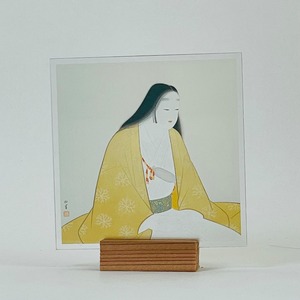


上村松園 楠公夫人 / “Kusunoki-fujin” (Lady Kusunoki)
【上村松園】
明治・大正・昭和を通じて、女性の気品と内面的な精神性を描き続けた近代美人画の最高峰。松園は、たおやかな女性像のみならず、歴史上の烈女や賢母を描くことで、日本女性が持つ芯の強さと道徳的な美しさを世に示しました。
【楠公夫人】
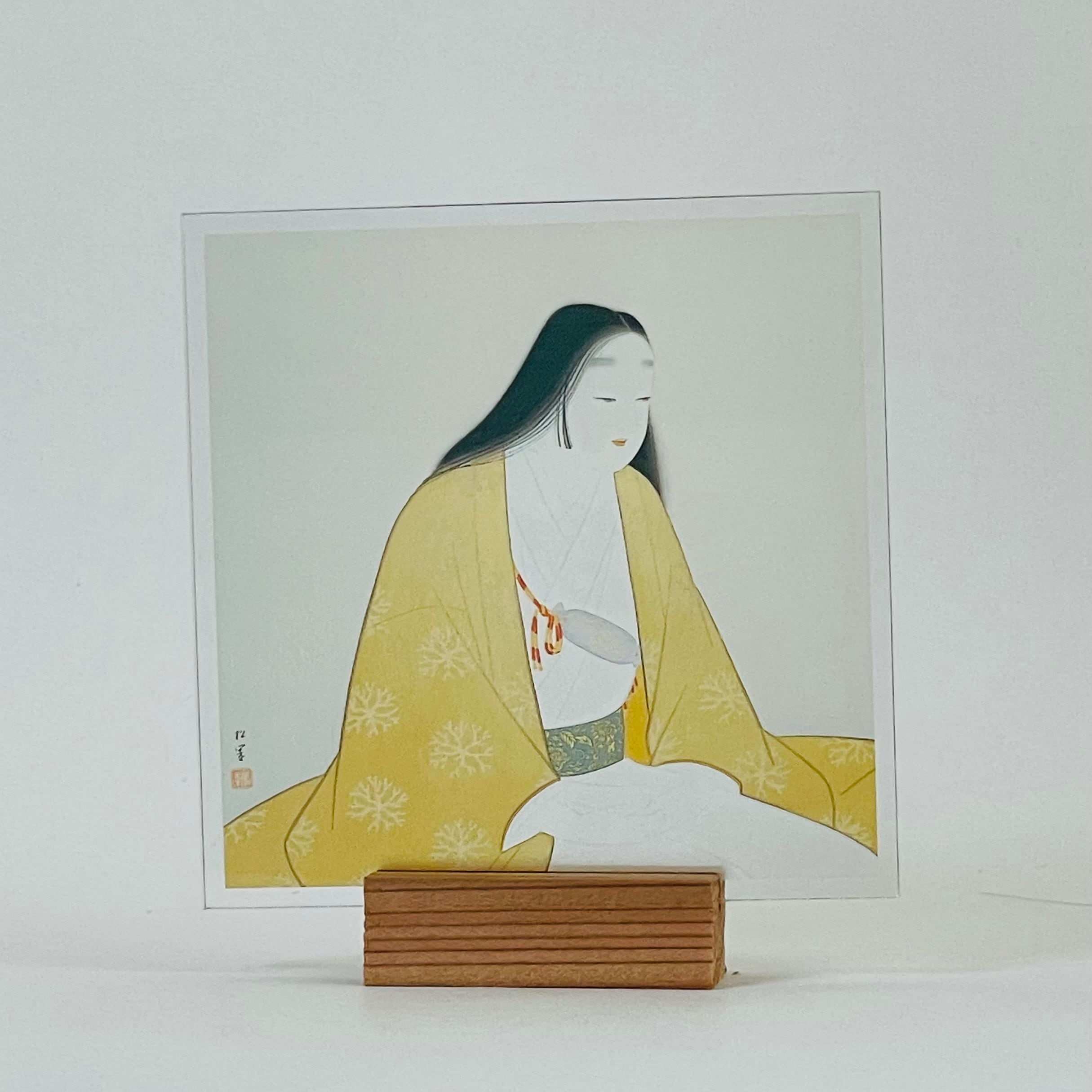
南北朝時代の忠臣・楠木正成の妻であり、正行(まさつら)の母である久子を描いた作品です。湊川の戦いで戦死した夫・正成から届いた形見の短刀を手に、自害しようとする幼い息子・正行を「父の遺志を継ぎ、再起を期すことこそが真の忠孝である」と厳しく諭す、有名な場面を象徴しています。
松園は、彼女を単なる悲劇の未亡人としてではなく、一国の運命を背負う武家の母としての「毅然たる佇まい」とともに描き出しました。乱れのない髪、硬く結ばれた口元、そして形見を抱く手。その眼差しには、悲しみを突き抜けた先の、透き通るような覚悟が宿っています。松園自身の「苦難に屈しない芸術家としての自意識」が、この楠公夫人の姿に重なっているようでもあります。
[Uemura Shoen]
A pioneering master of "Bijin-ga" (paintings of beautiful women) who pursued an ideal of beauty devoid of any vulgarity. She was the first woman to be awarded the Order of Culture, leaving an immortal legacy by portraying women with profound inner dignity and strength.
[Kusunoki-fujin (Lady Kusunoki)]
This powerful work depicts Hisako, the wife of the legendary loyalist samurai Kusunoki Masashige. It represents a pivotal historical moment where, after her husband's death in battle, she prevents her young son, Masatsura, from committing ritual suicide. She sternly instructs him that true loyalty lies in surviving to fulfill his father's unfinished mission. Shoen portrays her not as a mourning widow, but as a pillar of spiritual strength and maternal resolve. Her unwavering gaze, firm posture, and the way she holds the memento of her husband embody the stoic dignity of a samurai woman. This painting is a testament to Shoen’s belief in the resilient and noble spirit inherent in Japanese womanhood.
#上村松園 #楠公夫人 #楠木正成 #美人画 #日本画 #近代日本画 #伝統美 #母性 #精神美 #武士道 #UemuraShoen #JapaneseArt #Bijinga #SamuraiSpirit #JapaneseHistory #FineArt #MuseumQuality