


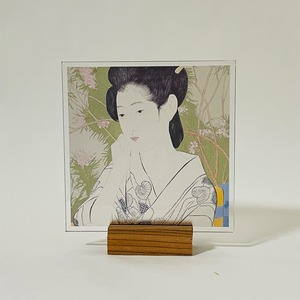


橋口五葉 温泉宿 / At the Hot Spring Inn
【橋口五葉】
「大正の歌麿」と称され、近代木版画(新版画)の世界で完璧主義を貫いた天才絵師。浮世絵の伝統的な美意識に、西洋画で培った精密な素描力を融合させ、女性の肌のぬくもりや、その場の空気感までも木版の上に定着させました。
【温泉宿】
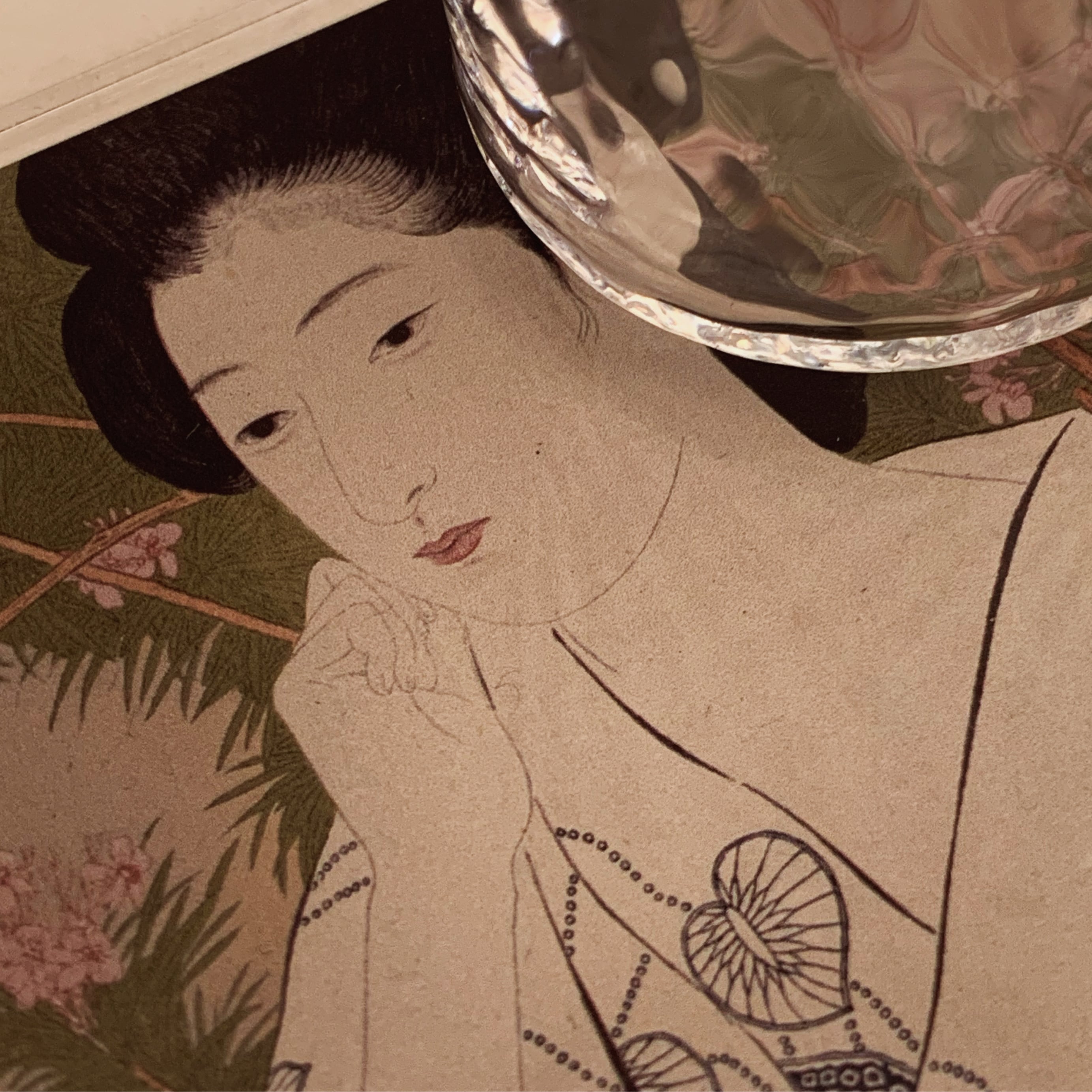
大正九年(1920年)、五葉が伊豆の修善寺温泉に滞在した際のスケッチをもとに制作された作品です。浴衣をゆるく纏い、縁側に腰を下ろしてくつろぐ女性の姿を描いています。
特筆すべきは、それまでの装飾的な美人画とは一線を画す「リアリズム」です。湯上がりの火照った肌の質感、重力に従ってしなやかに流れる肢体のライン、そしてどこか遠くを見つめる物憂げな眼差し。そこには、旅先という非日常の中でふと見せる、女性の無防備な素顔が写し取られています。
背景を排した構成が、浴衣の藍色と肌の白さの対比を鮮やかに引き立て、観る者を温泉宿の静かな夜気の中へと誘います。五葉の鋭い観察眼が、一時の休息に宿る「永遠の美」を見出した傑作です。
[Hashiguchi Goyo]
Known as the "Utamaro of the Taisho era," Goyo was a master of the Shin-hanga movement who demanded absolute perfection in woodblock printing. He seamlessly integrated the elegance of classical Ukiyo-e with a modern, realistic approach to sketching, capturing the subtle textures of human skin and the ephemeral atmosphere of a scene.
[At the Hot Spring Inn (Onsen-yado)]
Created based on sketches from Goyo's stay at Shuzenji Onsen in 1920, this work depicts a woman relaxing on a veranda after a bath, her yukata draped loosely around her. Unlike his more formal portraits, this piece is celebrated for its profound realism and sense of intimacy. The warmth of her post-bath skin, the natural flow of her relaxed posture, and her pensive, distant gaze capture a vulnerable and private moment during her travels. The minimalist composition emphasizes the striking contrast between the deep indigo of the yukata and her pale skin, drawing the viewer into the quiet, cool air of the inn. It is a masterpiece that finds eternal beauty within a fleeting moment of repose.
#橋口五葉 #温泉宿 #新版画 #美人画 #大正ロマン #浮世絵 #日本画 #修善寺 #旅情 #写実美 #HashiguchiGoyo #JapaneseArt #Bijinga #ShinHanga #Ukiyoe #OnsenCulture #TaishoAesthetic #FineArt #MuseumQuality