
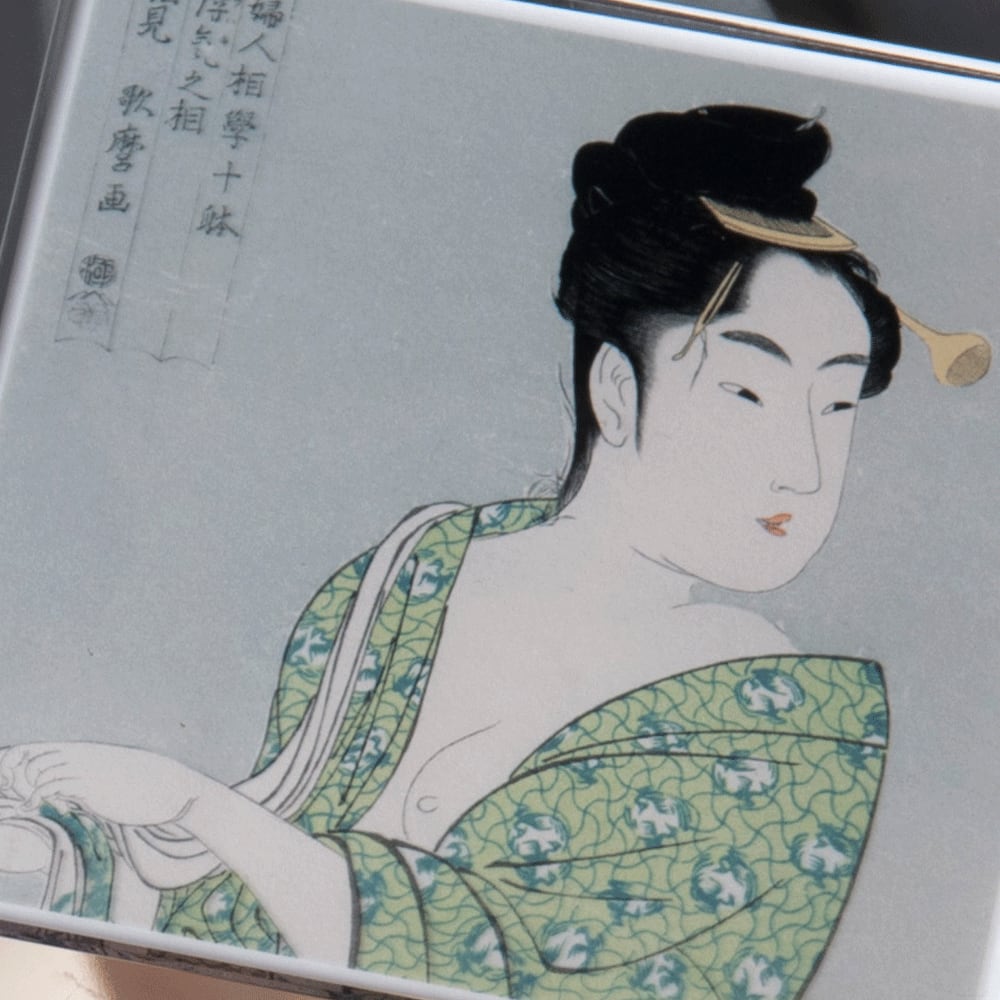
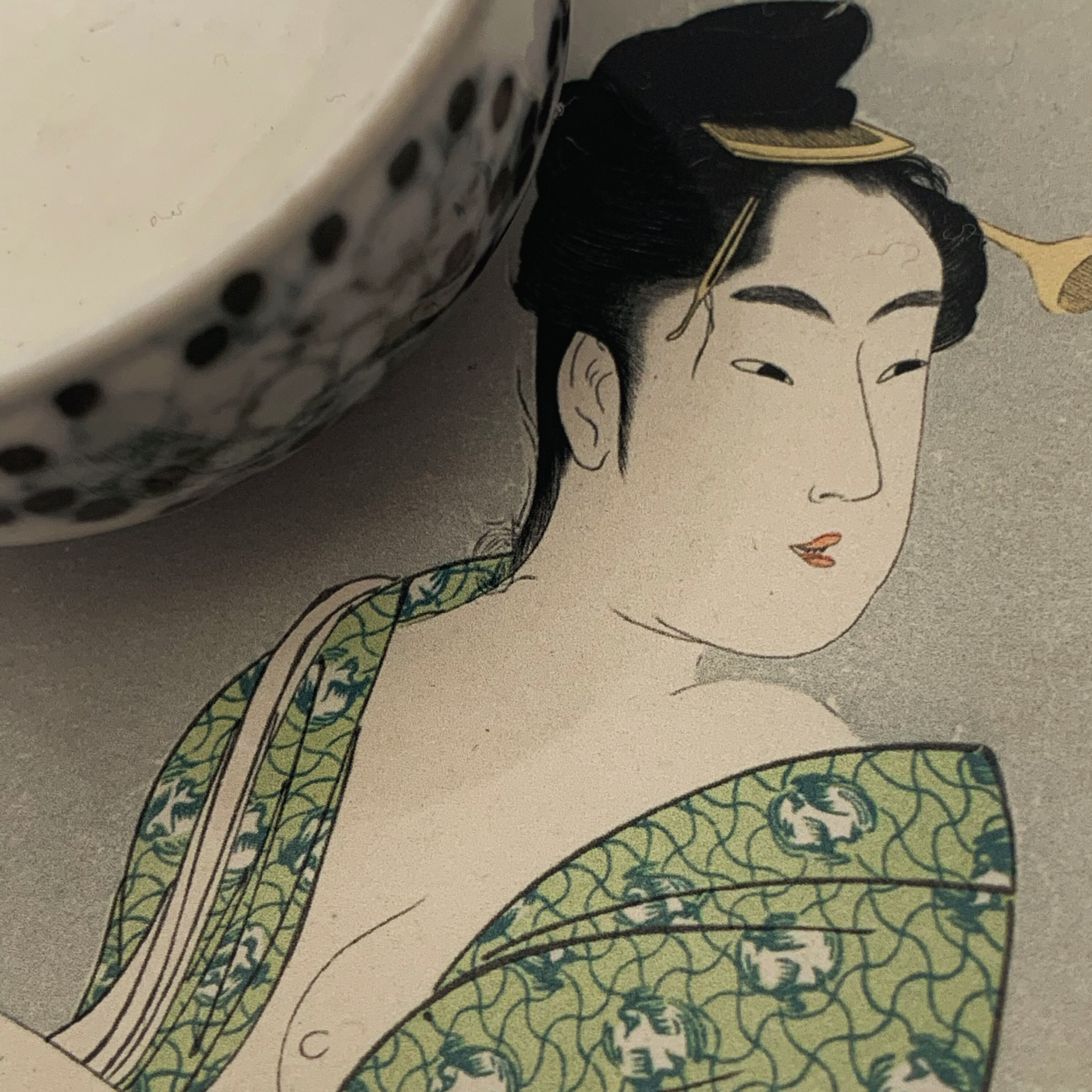



喜多川歌麿 婦女人相十品・浮気之相 / Ten Types of Female Physiognomy: The Unfaithful Type
【喜多川歌麿】
江戶時代浮世繪黃金時期的美人畫巨匠。他開創了專注於頭部與胸部以上的「大首繪」構圖,透過細膩的線條與創新的表現手法,捕捉女性纖細的心理變化與神韻,被譽為「青樓畫家」。
【婦女人相十品・浮氣之相】
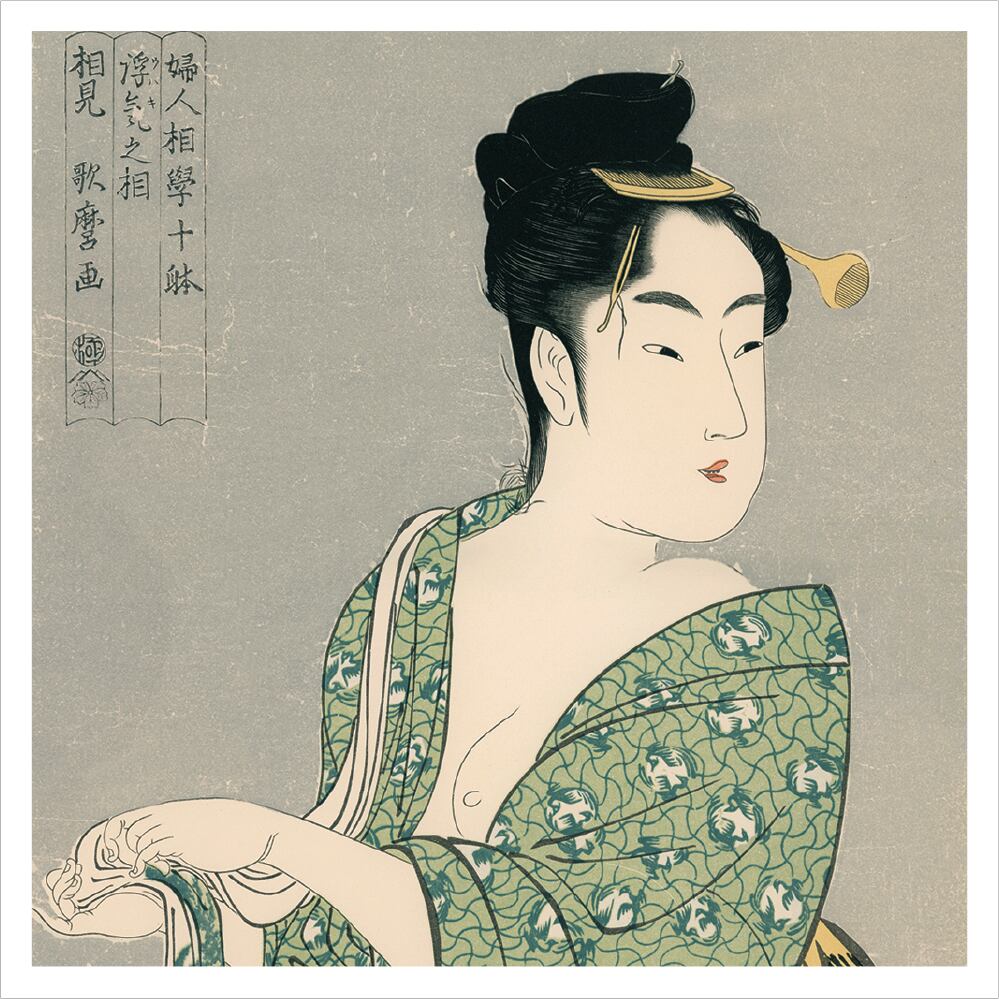
這是歌麿著名的「婦女人相十品」系列中最具代表性的傑作之一。所謂「人相」,是指透過面相觀察性格或命運。本作標題中的「浮氣(Uwaki)」,在當時並非專指現代意義上的「出軌」,更多是指心神不定、輕浮或是多情多欲的性格。
畫中女性剛沐浴完,身上隨意地披著一件寬鬆的格子紋浴衣(Yukata),右手提著衣襟,左手則拿著一條毛巾搭在肩上。她那略顯凌亂的頭髮、微微露出的頸部與胸口,營造出一種剛洗完澡後特有的慵懶與性感。歌麿在此精妙地描繪了她眼神中的游離與不羈,成功地將一種難以捉摸、飄忽不定的情感狀態固化在畫布之上。這種對「性格」與「感官」的深刻洞察,使其成為美人畫史上的巔峰之作。
[Kitagawa Utamaro]
The preeminent master of "Bijin-ga" during the golden age of Ukiyo-e. He revolutionized the genre with "Okubi-e" (large-head portraits), moving beyond mere physical depiction to capture the inner psyche and subtle emotions of his subjects.
[Ten Types of Female Physiognomy: The Unfaithful Type (Fujo Ninso Juppin: Uwaki no So)]
This masterpiece is one of Utamaro's most ambitious works, aiming to categorize female characters through their facial features. In the Edo period, "Uwaki" referred to a flighty, restless, or sensual nature rather than modern infidelity. The woman is depicted in a state of post-bath dishabille, draped loosely in a checkered yukata. Her slightly disheveled hair and the casual way she holds her robe evoke a sense of raw, uninhibited sensuality. Utamaro masterfully captures her wandering gaze and restless spirit, transforming a study of "physiognomy" into a profound exploration of human desire and personality.
#喜多川歌麿 #浮世繪 #美人畫 #江戶時代 #大首繪 #人相 #浮氣之相 #日本畫 #傳統美 #感官美 #KitagawaUtamaro #Ukiyoe #JapaneseArt #Bijinga #EdoPeriod #Physiognomy #CulturalHeritage #MuseumQuality