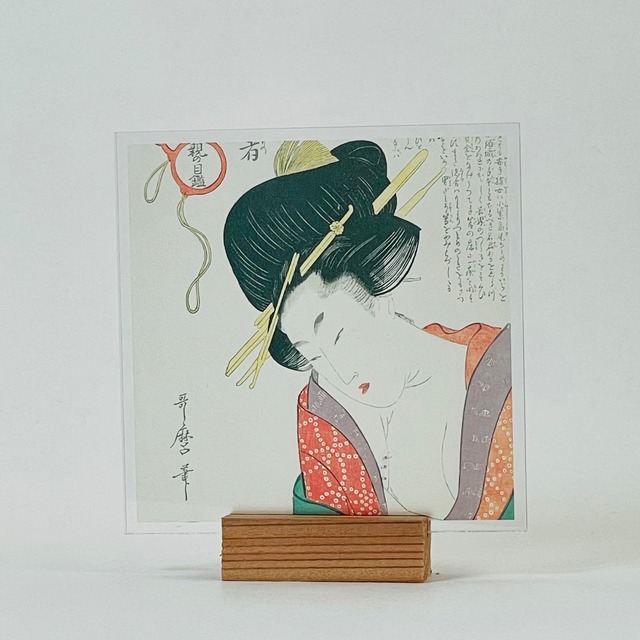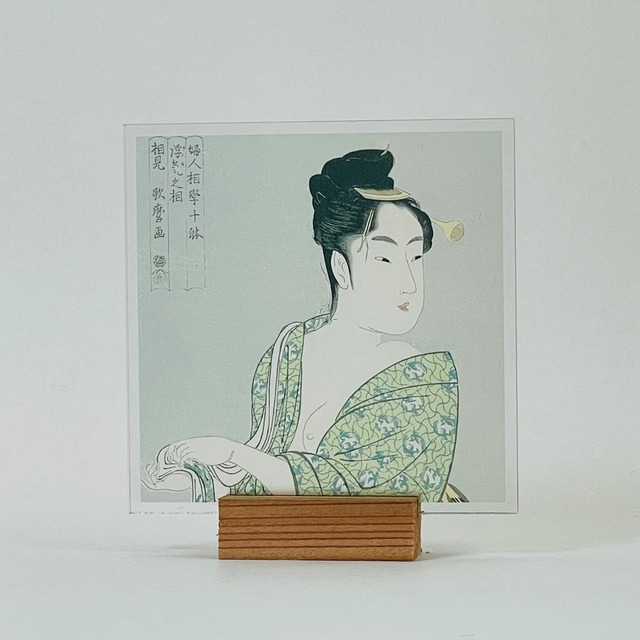
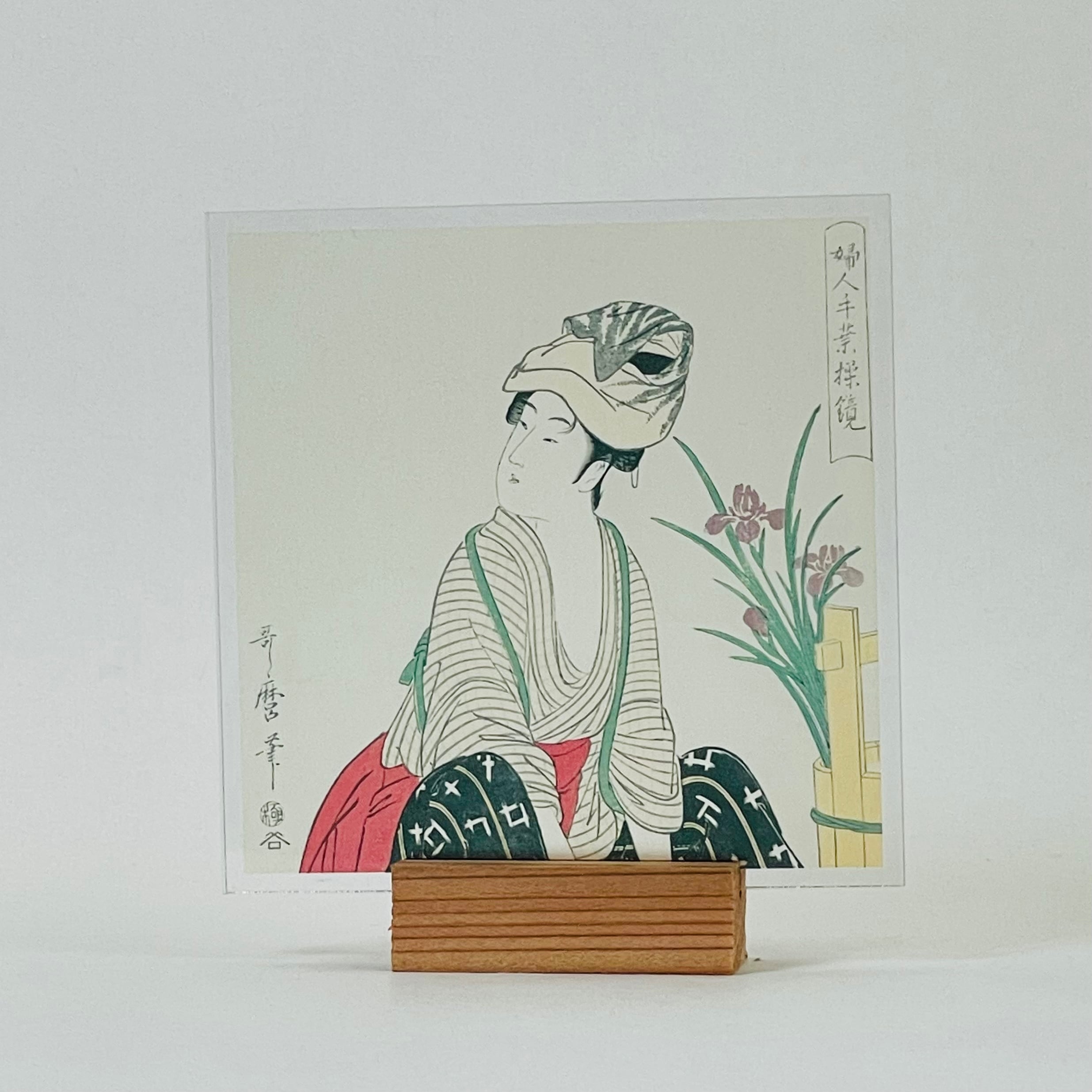
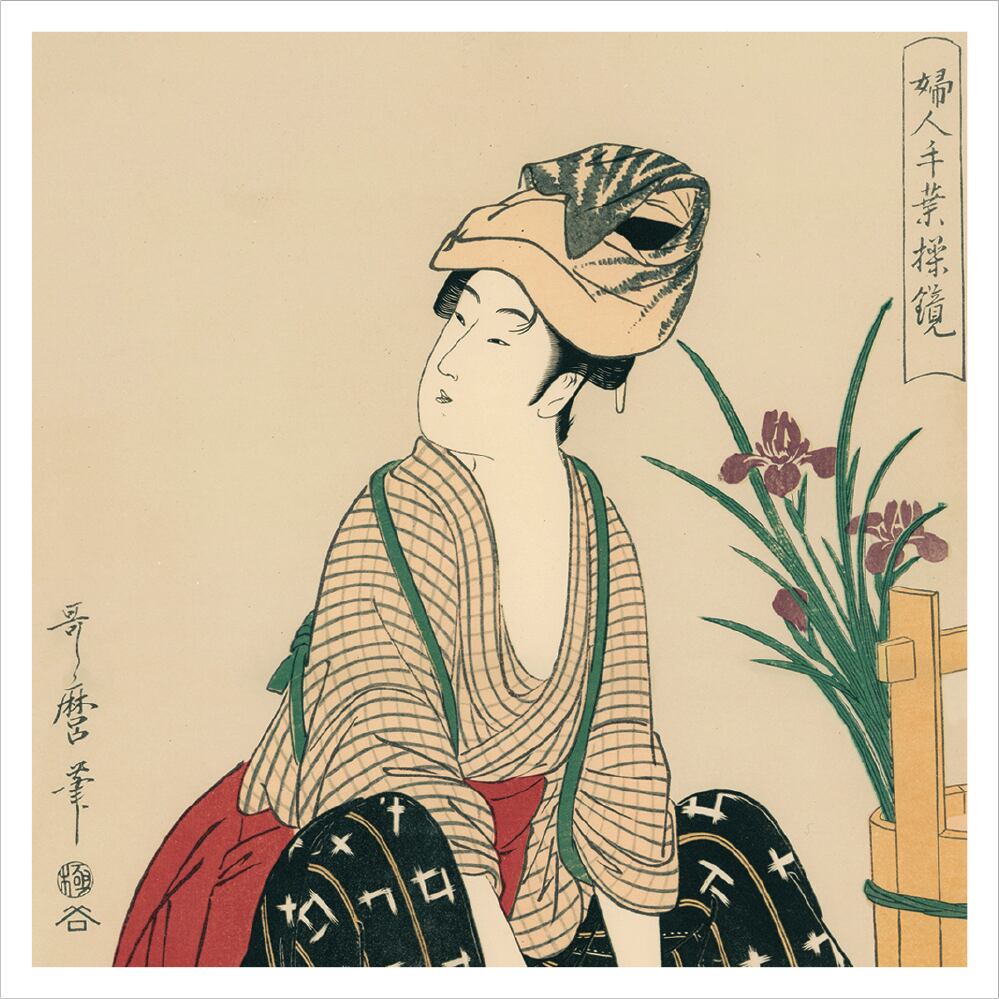
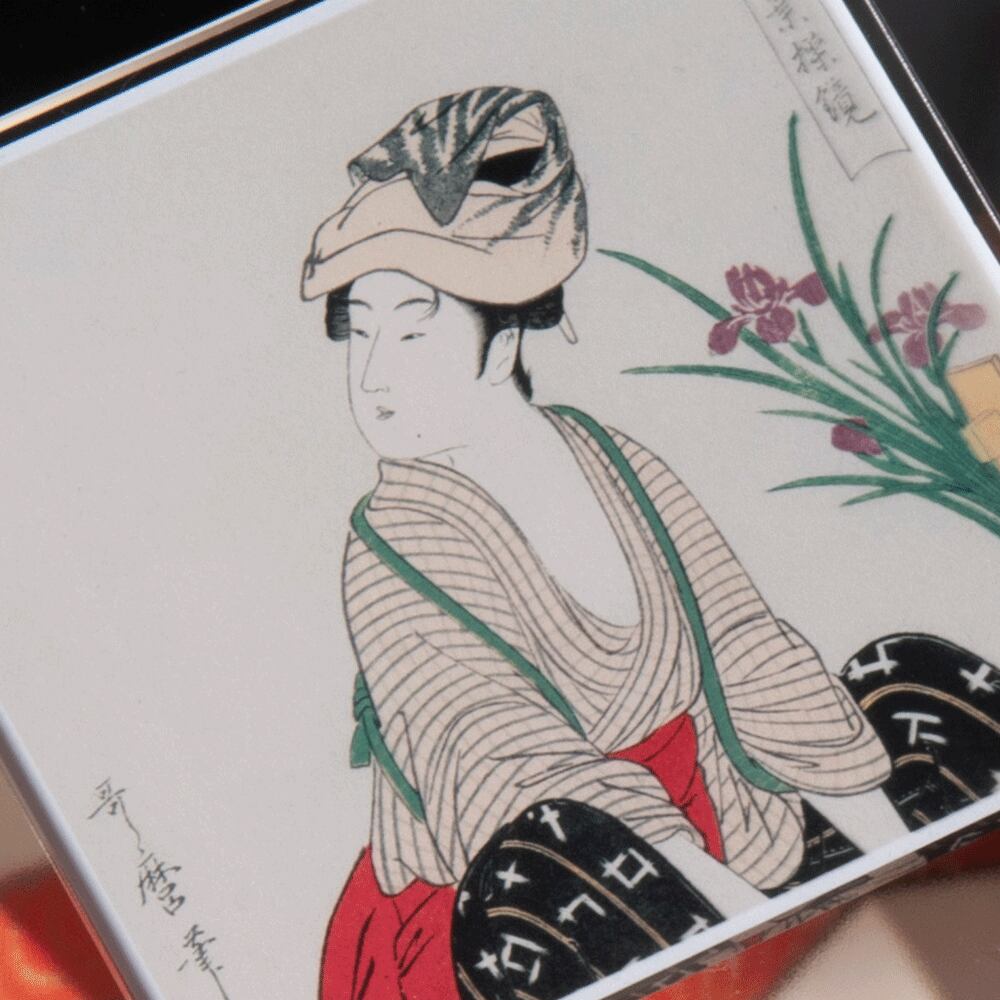
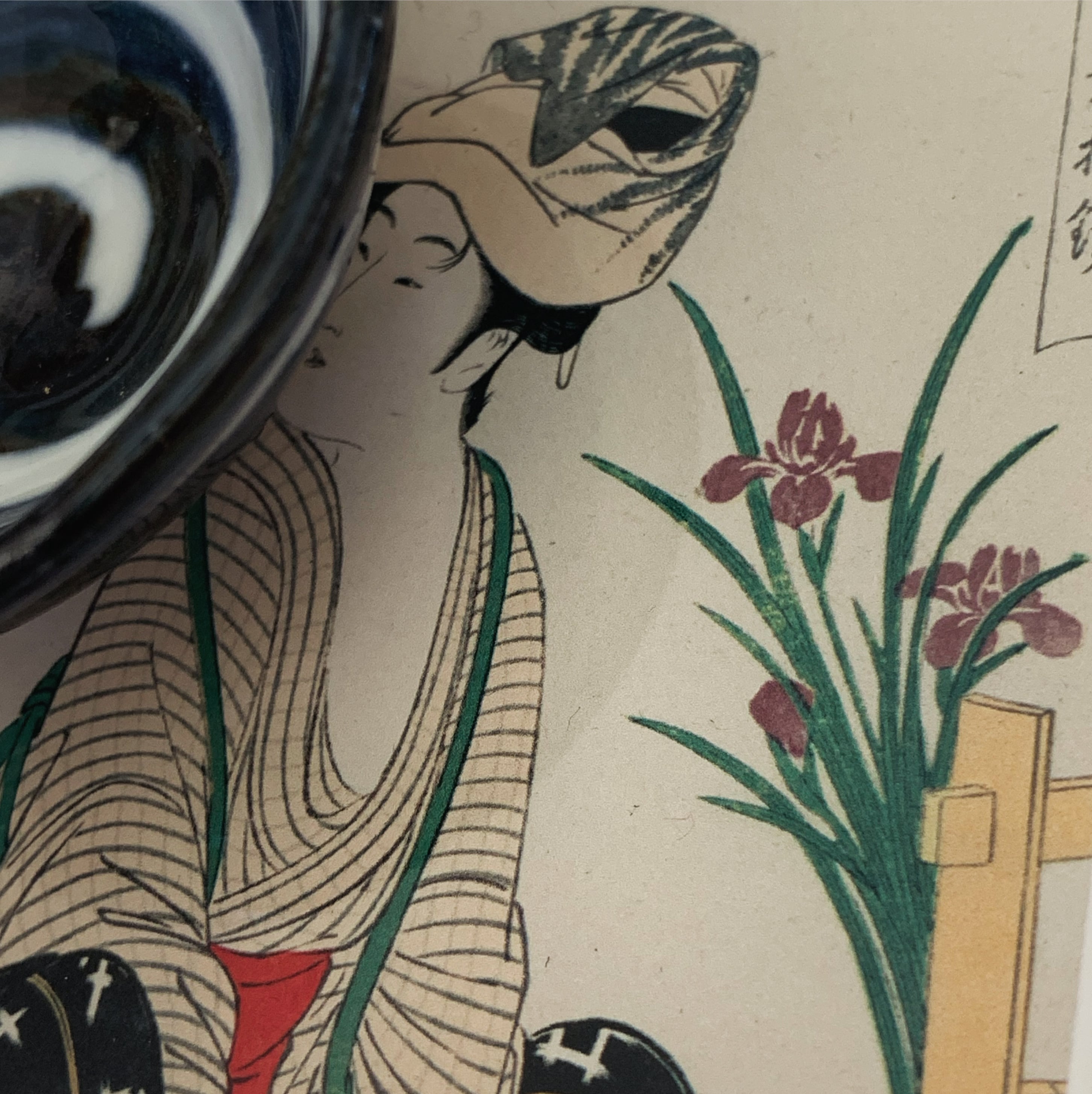


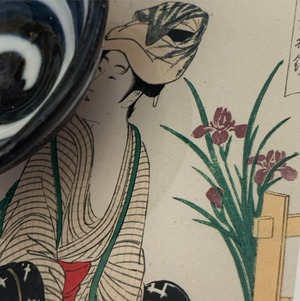
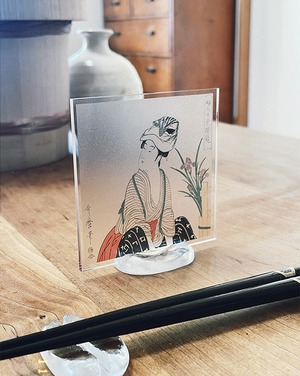
喜多川歌麿 婦人手業操鏡・洗濯 / Women's Handy Work: Laundry
【喜多川歌麿】
江戸時代、浮世絵黄金期を代表する美人画の大家。女性の顔を大きく描く「大首絵(おおくびえ)」を創始し、外面的な美しさだけでなく、その内面に潜む感情や機微までも描き出しました。繊細な線描と柔らかな色彩により、江戸の女性たちの憧れの的となった絵師です。
【婦人手業操鏡・洗濯】
女性の日常的な家事の姿を、鏡を通した視点で描く「婦人手業操鏡(ふじんてわざあやつりかがみ)」シリーズの一図です。
本作では、洗濯に勤しむ二人の女性が描かれています。一人は盥(たらい)の前に座り込み、もう一人は洗い上げた布を力強く絞る。注目すべきは、労働の最中であっても失われない女性たちの「艶やかさ」です。腕を捲り上げ、胸元がわずかに着崩れた姿は、生活感の中に江戸特有の健康的な色香を漂わせています。
歌麿は、単なる風俗画としてではなく、布の質感や水の動き、そして働く女性のしなやかな肢体を、洗練された構図の中に封じ込めました。日常の何気ない「手仕事」を芸術の域へと高めた、歌麿の鋭い観察眼が光る名作です。
[Kitagawa Utamaro]
The preeminent master of "Bijin-ga" (paintings of beautiful women) during the golden age of Ukiyo-e in the Edo period. He revolutionized the genre by creating "Okubi-e" (large-head portraits), capturing not just physical beauty but the subtle emotions and personalities of his subjects with delicate lines and soft colors.
[Women's Handy Work: Laundry (Fujin Te-waza Ayatsuri Kagami: Sentaku)]
This print is part of a series titled "A Mirror of Women's Handy Work," which captures women engaged in various daily chores. This specific scene depicts two women focused on their laundry—one scrubbing at a washbowl and the other vigorously wringing out a cloth. Utamaro masterfully portrays the vitality and healthy sensuality of these working-class women; their rolled-up sleeves and slightly loosened robes reveal a realistic yet elegant glimpse into Edo life. By focusing on the rhythmic movements of their bodies and the textures of the fabric, Utamaro transforms a mundane household task into a sophisticated work of art, celebrating the inherent grace found in everyday labor.
#喜多川歌麿 #浮世絵 #美人画 #江戸時代 #風俗画 #洗濯 #手仕事 #伝統美 #日本画 #江戸文化 #KitagawaUtamaro #Ukiyoe #JapaneseArt #Bijinga #EdoPeriod #HandyWork #CulturalHeritage #MuseumQuality