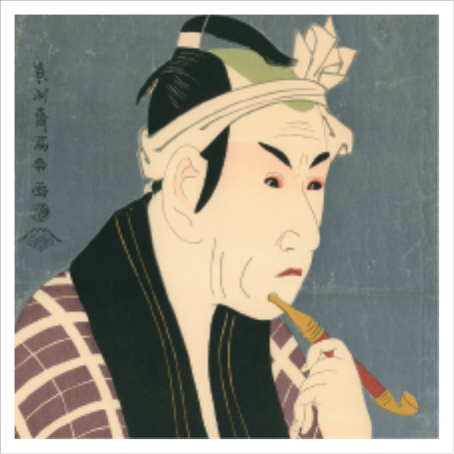


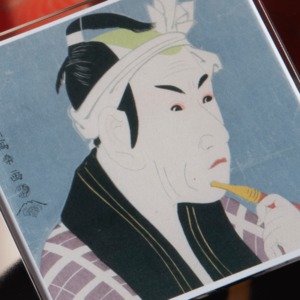
東洲斎写楽 四世松本幸四郎の山谷の肴屋五郎兵衛 / Matsumoto Koushirou IV as the Fish Seller Gorobei
【東洲斎写楽】
浮世絵史上、最も強烈なインパクトを残した謎の天才。役者の容姿をありのままに、時には醜い部分さえも誇張して描くその手法は、当時の江戸の人々に驚きと困惑を与えましたが、現在では役者の人間性や内面の情熱を抉り出す究極の表現として高く評価されています。
【四世松本幸四郎の山谷の肴屋五郎兵衛】
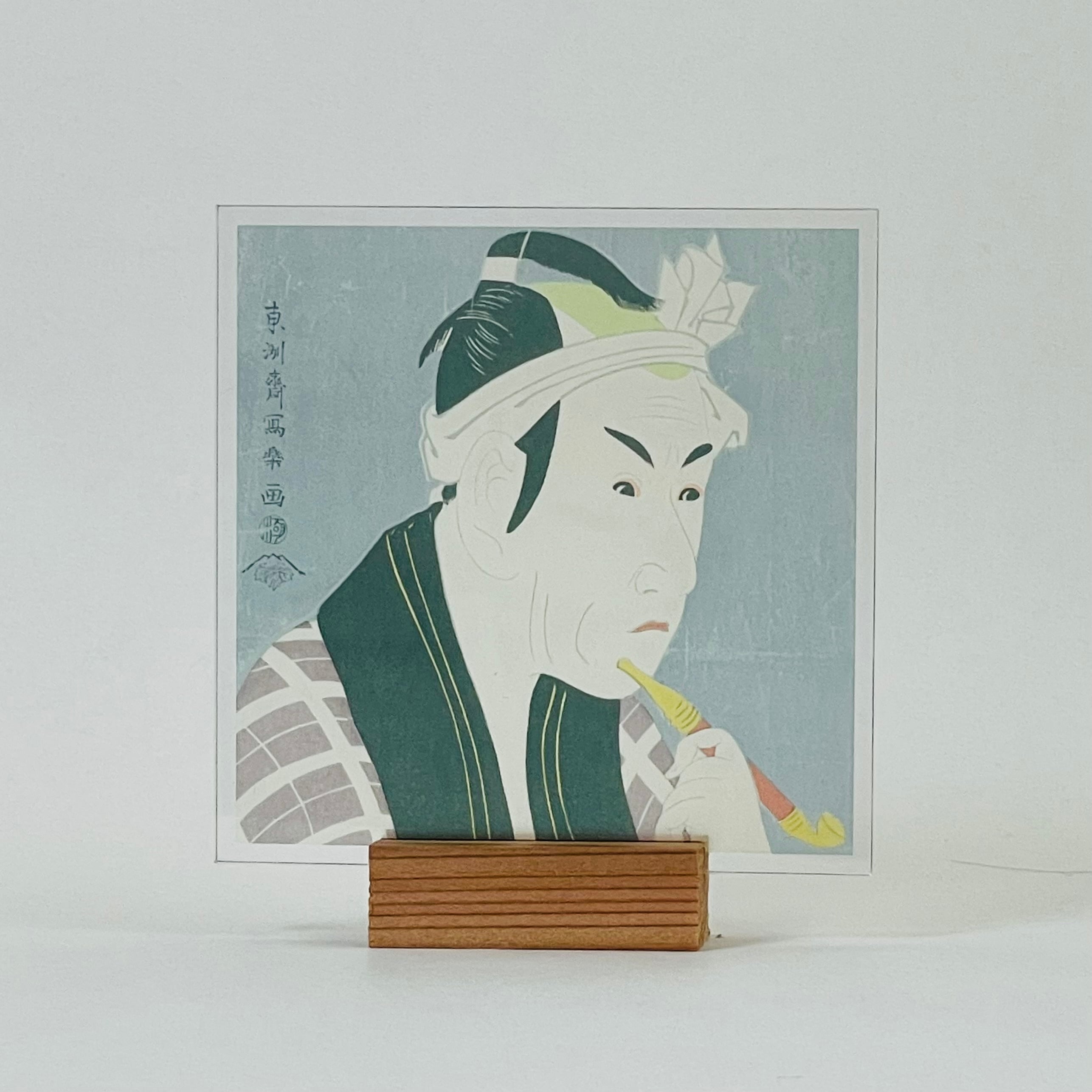
寛政6年5月、河原崎座で上演された『恋女房染手綱(こいにょうぼうそめてづな)』に登場する肴屋五郎兵衛を描いた大首絵です。
四世松本幸四郎は、当時「鼻の幸四郎」と呼ばれるほど大きな鼻が特徴的でしたが、写楽はその特徴をあえて強調しつつ、そこに江戸の職人・町人としての「男の意地」を封じ込めました。
太い眉を寄せ、口を一文字に結んだ表情からは、困難に立ち向かう力強さと、正義感の強さが伝わってきます。また、その独特な鼻のラインが、顔立ちに力強い個性を与え、観る者に強い印象を残します。背景の「黒雲母摺(くろきらすり)」が、幸四郎の白い顔と意志の強さをより鮮明に、格調高く浮かび上がらせています。
[Toshusai Sharaku]
An enigmatic genius who left the most profound impact in Ukiyo-e history. Sharaku's technique of depicting actors with stark realism—sometimes exaggerating their physical flaws—initially bewildered the Edo public. Today, it is revered as the ultimate expression for unmasking the raw humanity and inner passion of the performers.
[Matsumoto Koshiro IV as the Fish Seller Gorobei]
This "Okubi-e" depicts the actor Matsumoto Koshiro IV in the role of the fish seller Gorobei from the play "Koi Nyobo Some-wakage," performed in May 1794. Koshiro IV was famous for his prominent nose, earnng him the nickname "Nose Koshiro." Sharaku boldly emphasizes this feature while infusing the portrait with the "Edokko" spirit—a mix of grit, pride, and streetwise charm. The furrowed brow and firmly set mouth convey a sense of justice and unwavering resolve. The dark mica background (Kuro-kira) provides a sophisticated contrast, highlighting the actor's strong profile and the dignity of the character. It is a masterpiece that finds heroic beauty within a distinctively realistic portrayal.
#東洲斎写楽 #松本幸四郎 #肴屋五郎兵衛 #浮世絵 #役者絵 #大首絵 #江戸時代 #黒雲母摺 #江戸っ子 #伝統美 #ToshusaiSharaku #Ukiyoe #JapaneseArt #Kabuki #EdoPeriod #EdoSpirit #CulturalHeritage #MuseumQuality