

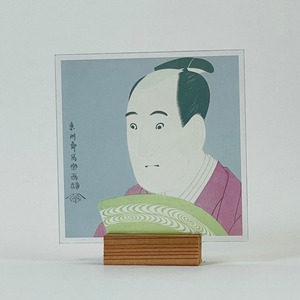

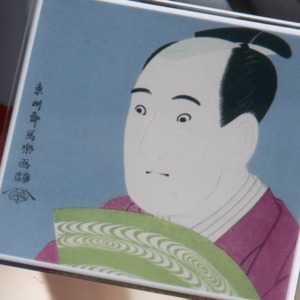
東洲斎写楽 三世沢村宗十郎の大岸蔵人 / Sawatari Sojurou III as Ohgishi Kurando
【東洲斎写楽】
江戸時代、彗星のごとく現れ、わずか10ヶ月で浮世絵の歴史を塗り替えた天才絵師。役者の特徴を大胆に誇張し、その人物の深層心理や役柄の本質を剥き出しにする技法は、世界中の芸術家に多大な影響を与えました。
【三世沢村宗十郎の大岸蔵人】
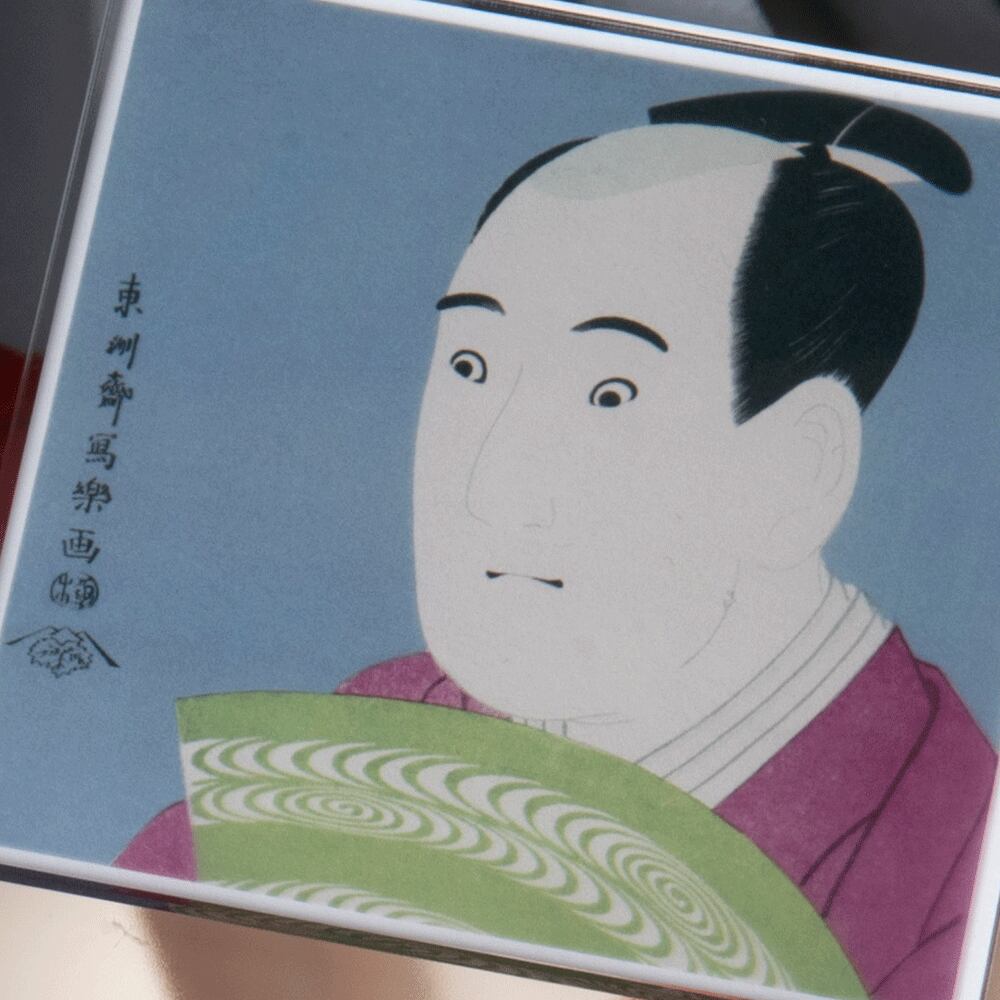
寛政6年5月、都座で上演された『花菖蒲文禄曽我(はなしょうぶぶんろくそが)』に登場する大岸蔵人を描いた大首絵です。
三世沢村宗十郎は、理知的で気品のある演技で人気を博した当時の名優。本作においても、写楽はその「気高さ」を見事に捉えています。軽く閉じた口元、思慮深さを湛えた穏やかな眼差し、そして扇を手にする優雅な所作。写楽特有の強烈なデフォルメを抑え、武士としての矜持と、静かな決意を感じさせる端正な一図に仕上げています。
背景に施された「黒雲母摺(くろきらすり)」が、宗十郎の白い顔立ちを格調高く浮かび上がらせ、画面全体に重厚な静寂と、深い余韻をもたらしています。
[Toshusai Sharaku]
An enigmatic genius of the Edo period who redefined Ukiyo-e in just ten months. By boldly exaggerating the facial features and psychological states of Kabuki actors, Sharaku moved beyond mere likeness to capture the very soul of the performance, leaving a legacy that continues to fascinate the world.
[Sawamura Sojuro III as Ogishi Kurando]
This "Okubi-e" portrays the popular actor Sawamura Sojuro III in the role of the dignified samurai Ogishi Kurando, performed in May 1794. Sojuro was renowned for his refined and intellectual acting style, which Sharaku captures here with exceptional grace. Unlike his more grotesque portrayals of villains, Sharaku depicts the actor with a calm, thoughtful gaze and an elegant posture holding a fan. The print radiates the quiet strength and pride of a high-ranking samurai. The dark mica background (Kuro-kira) creates a sophisticated contrast, making the actor’s serene expression stand out with a sense of gravity and timeless beauty.
#東洲斎写楽 #沢村宗十郎 #大岸蔵人 #浮世絵 #役者絵 #大首絵 #江戸時代 #黒雲母摺 #武士道 #伝統美 #ToshusaiSharaku #Ukiyoe #JapaneseArt #Kabuki #EdoPeriod #SamuraiSpirit #CulturalHeritage #MuseumQuality