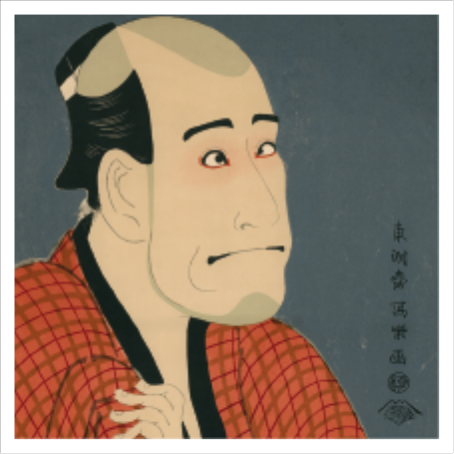
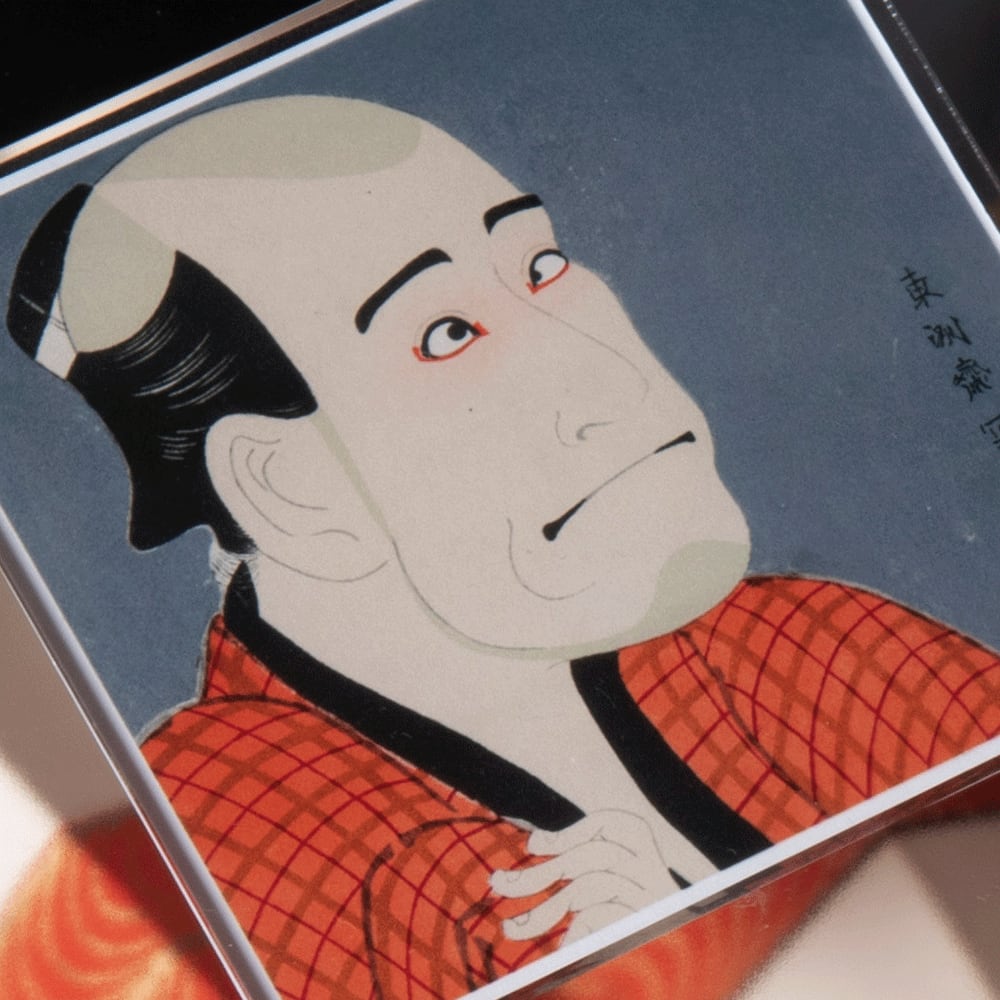
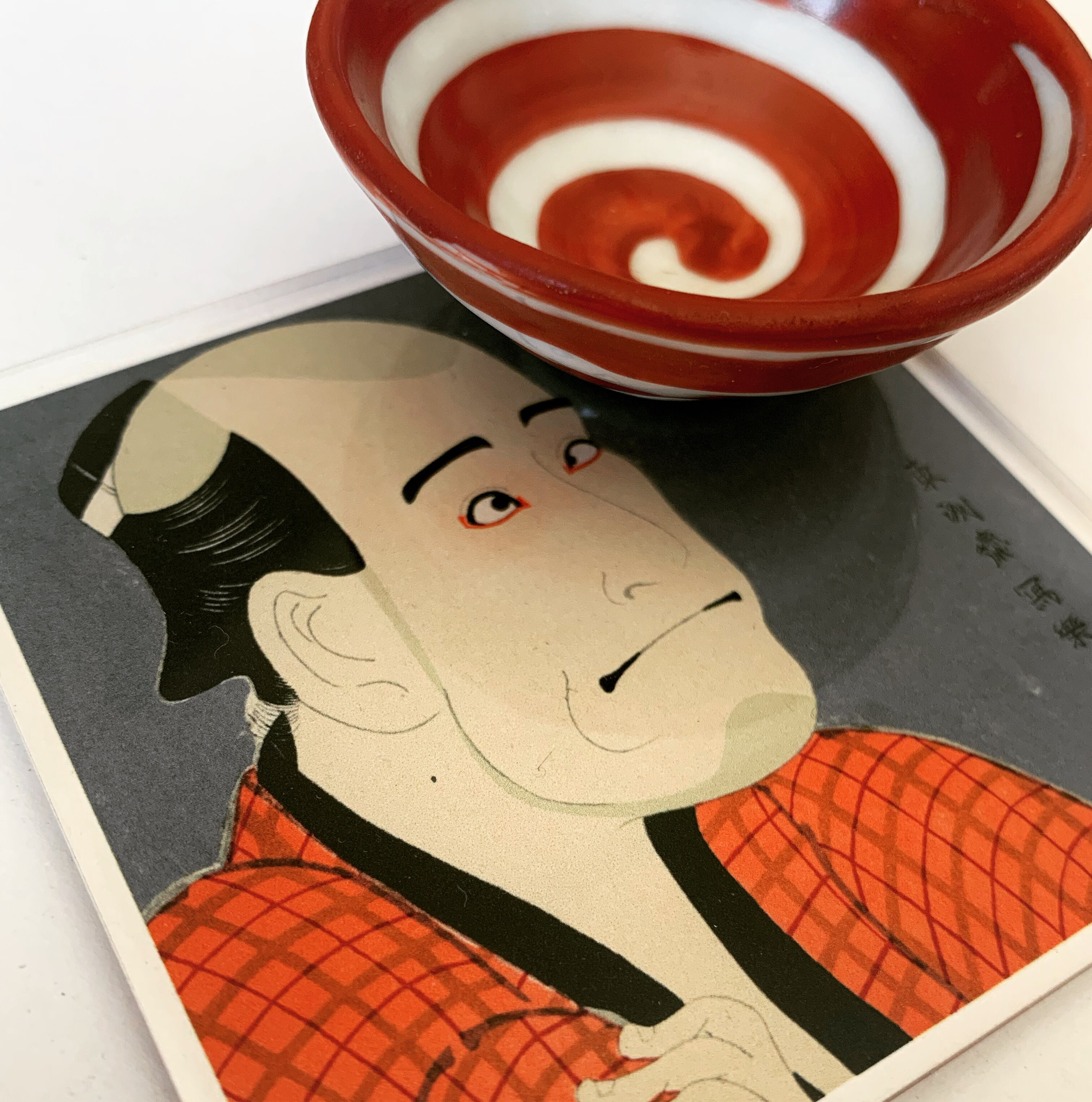
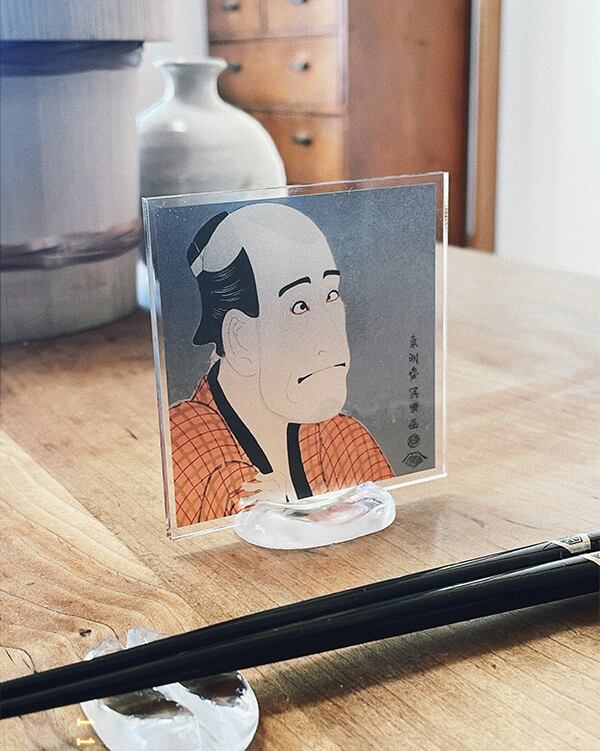


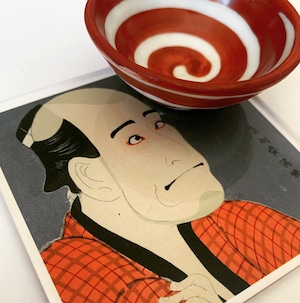

東洲斎写楽 嵐竜蔵の金貸石部金吉 / Arashi Ryuzo as the Moneylender Ishibe Kinkichi
【東洲斎写楽】
江戸時代、わずか10ヶ月という短い活動期間で浮世絵界に革命を起こした謎の絵師。役者を美化する慣習を捨て去り、その人物の癖や醜さ、あるいは役柄の持つ負の感情までも誇張して描くその表現は、近代表現主義を先取りしたかのような衝撃を今なお与え続けています。
【嵐竜蔵の金貸石部金吉】
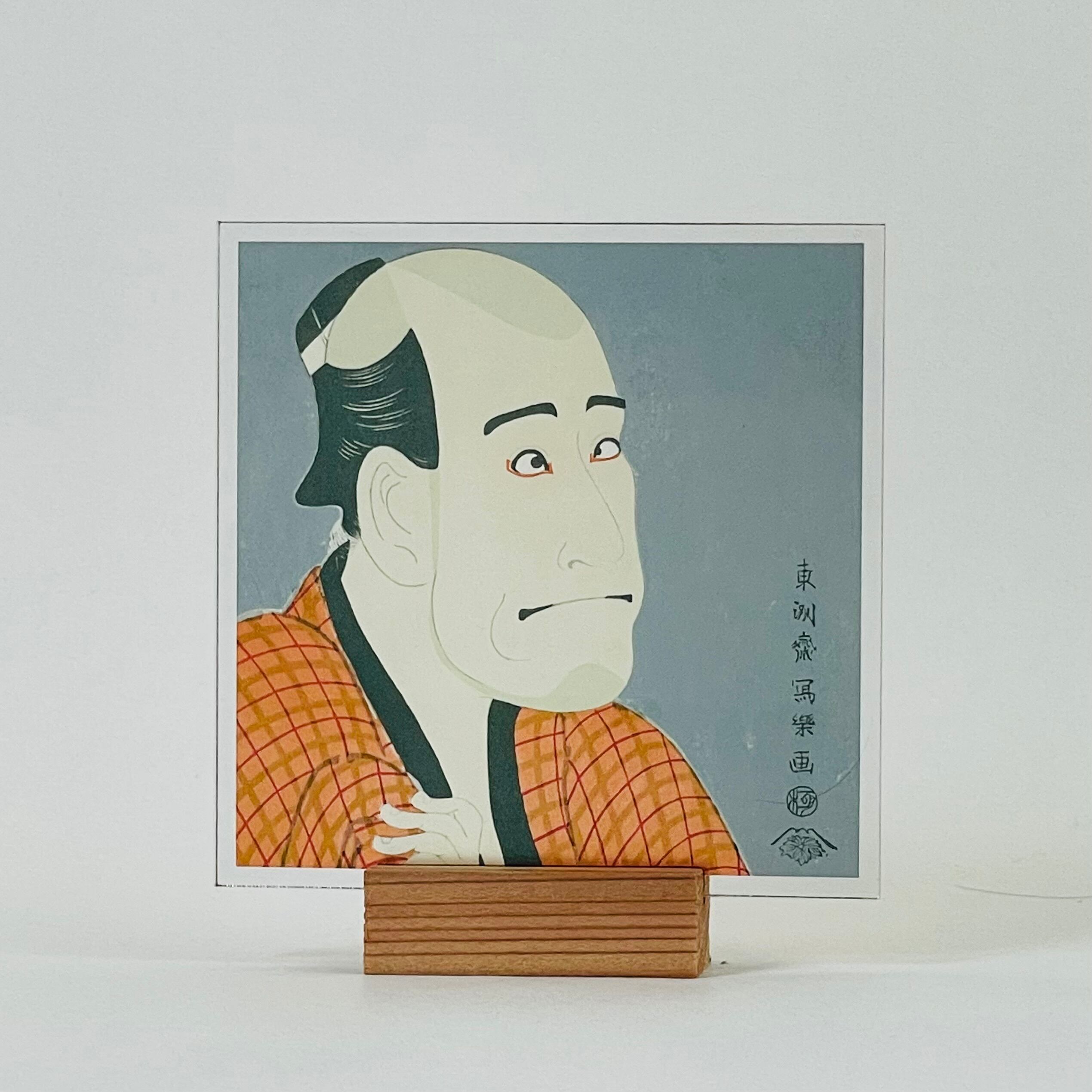
寛政6年5月、都座で上演された『花菖蒲文禄曽我(はなしょうぶぶんろくそが)』に登場する強欲な金貸し、石部金吉を描いた大首絵です。
本作の見どころは、何と言ってもその「表情の醜悪さ」にあります。突き出した顎、薄い唇、そして相手を小馬鹿にするような細い眼差し。嵐竜蔵という役者の特徴を最大限に活かしつつ、金に執着する人間の卑しさを冷徹に描き出しました。
背景に施された「黒雲母摺(くろきらすり)」の重厚な輝きが、この人物の放つ負のエネルギーを際立たせ、観る者に強い違和感と同時に、目が離せないほどの強烈なインパクトを残します。人間の本質を突く写楽の「眼」の鋭さを証明する、異色の傑作です。
[Toshusai Sharaku]
An enigmatic artist who revolutionized the world of Ukiyo-e during a brief ten-month career starting in 1794. By abandoning the tradition of idealizing actors and instead exaggerating their flaws and negative emotions, Sharaku’s work remains profoundly impactful, often seen as a precursor to modern expressionism.
[Arashi Ryuzo as the Moneylender Ishibe Kinkichi]
This "Okubi-e" depicts the actor Arashi Ryuzo in the role of the greedy moneylender Ishibe Kinkichi from the play "Hana-shobu Bunroku Soga," performed in May 1794. The masterpiece is defined by its unapologetic portrayal of human avarice. With a protruding chin, thin lips, and a disdainful, squinting gaze, Sharaku captures the vulgarity of a man obsessed with money. The dark mica background (Kuro-kira) emphasizes the negative charisma of the character, leaving the viewer with a lasting impression of raw, psychological intensity. It is a striking example of Sharaku's ability to expose the "unvarnished truth" of the human condition through his art.
#東洲斎写楽 #嵐竜蔵 #石部金吉 #浮世絵 #役者絵 #大首絵 #江戸時代 #黒雲母摺 #リアリズム #伝統美 #ToshusaiSharaku #Ukiyoe #JapaneseArt #Kabuki #EdoPeriod #CharacterStudy #CulturalHeritage #MuseumQuality