

喜多川歌麿 木挽町新やしき・小伊勢屋おちゑ / Ochie of Koiseya, Kobikich? Shin-Yashiki
【喜多川歌麿】
江戸時代、浮世絵黄金期を築いた美人画の第一人者。女性の容姿のみならず、その場の空気感や流行を捉える才に長け、実在する茶屋の看板娘などをモデルにした作品で江戸中の話題を独占しました。
【木挽町新やしき・小伊勢屋おちゑ】
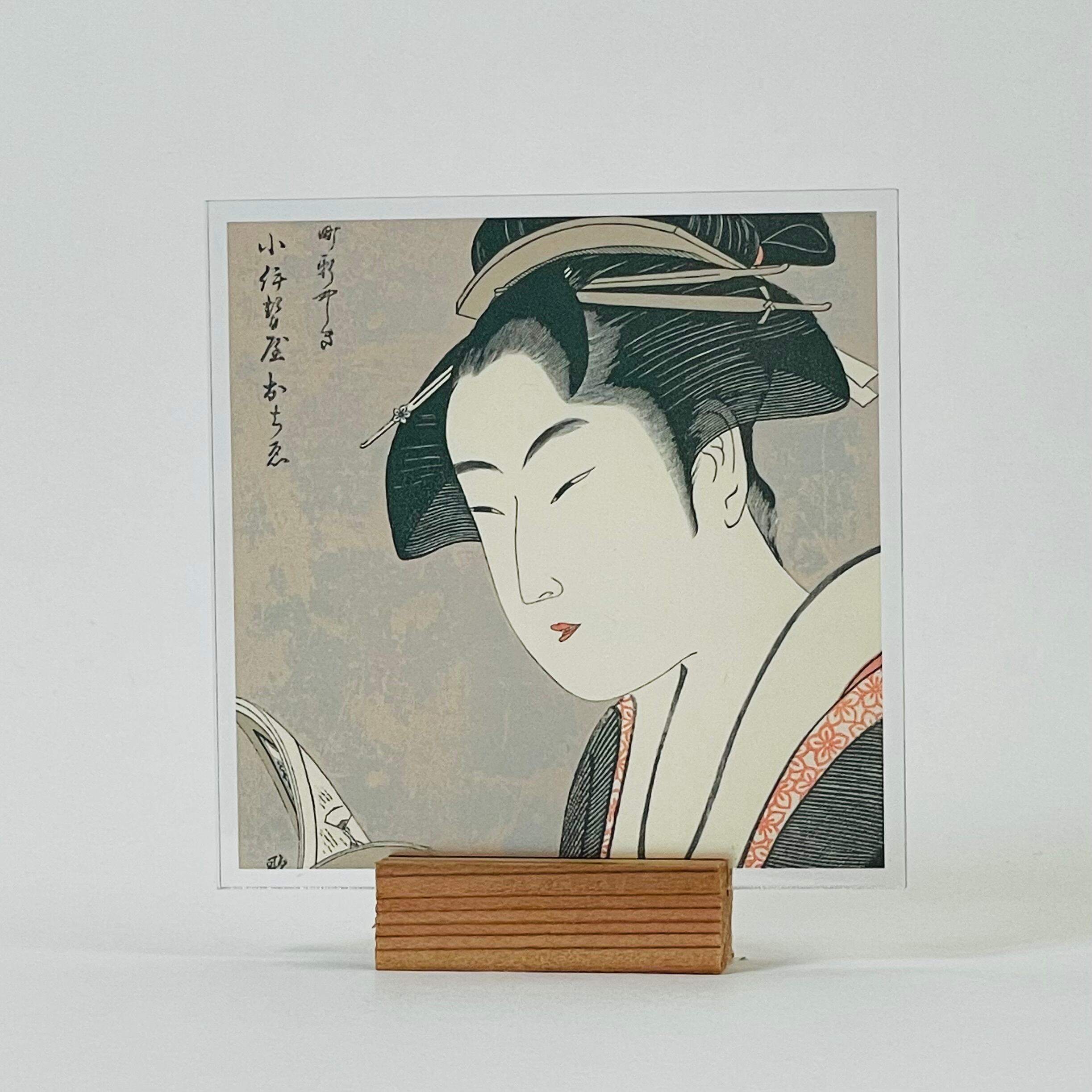
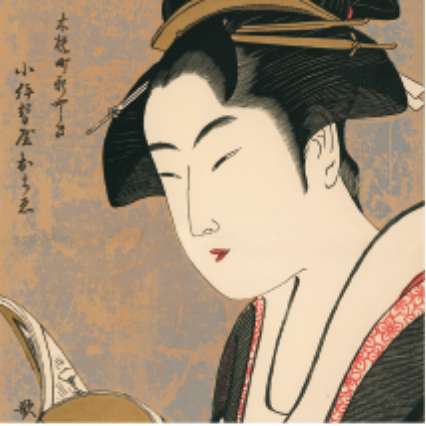
木挽町(現在の銀座周辺)にあった茶屋「小伊勢屋」の看板娘、おちゑを描いた大首絵です。彼女は「江戸の三美人」の一人に数えられるほど高い人気を誇り、彼女を一目見ようと店には多くの客が詰めかけました。
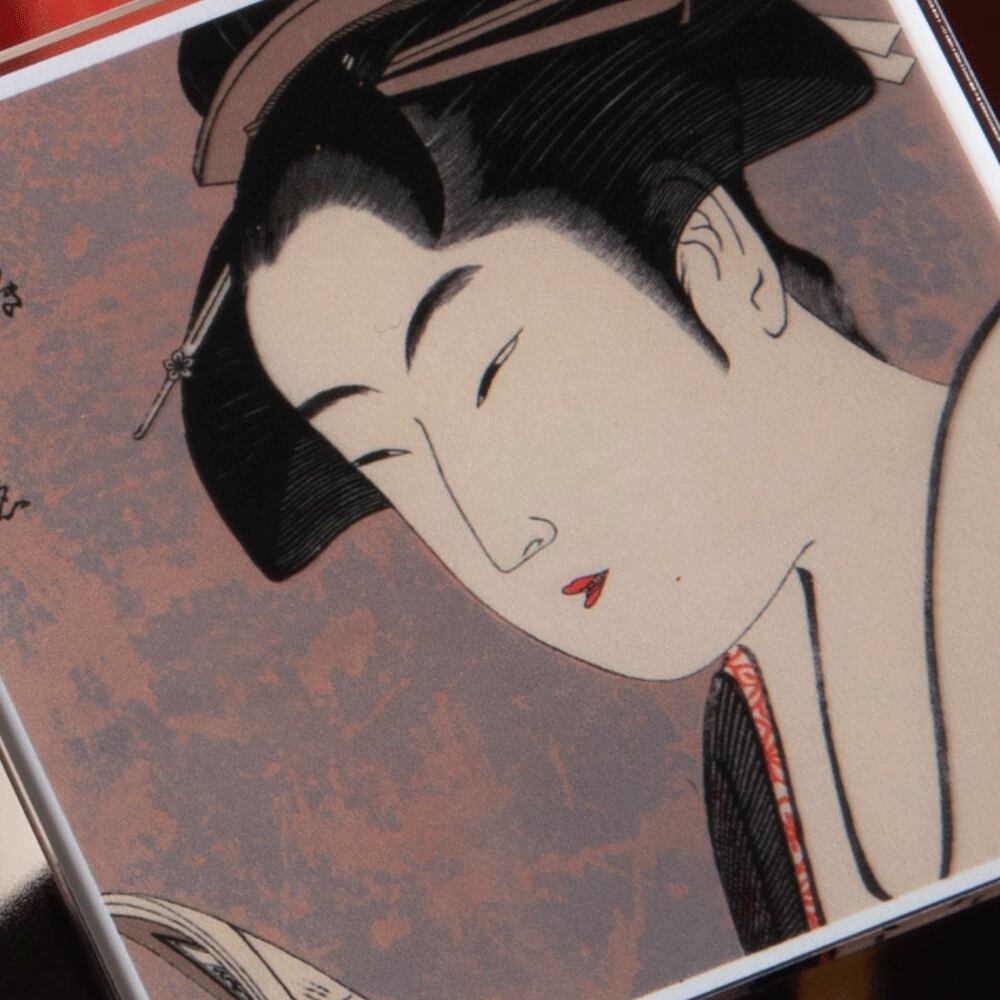
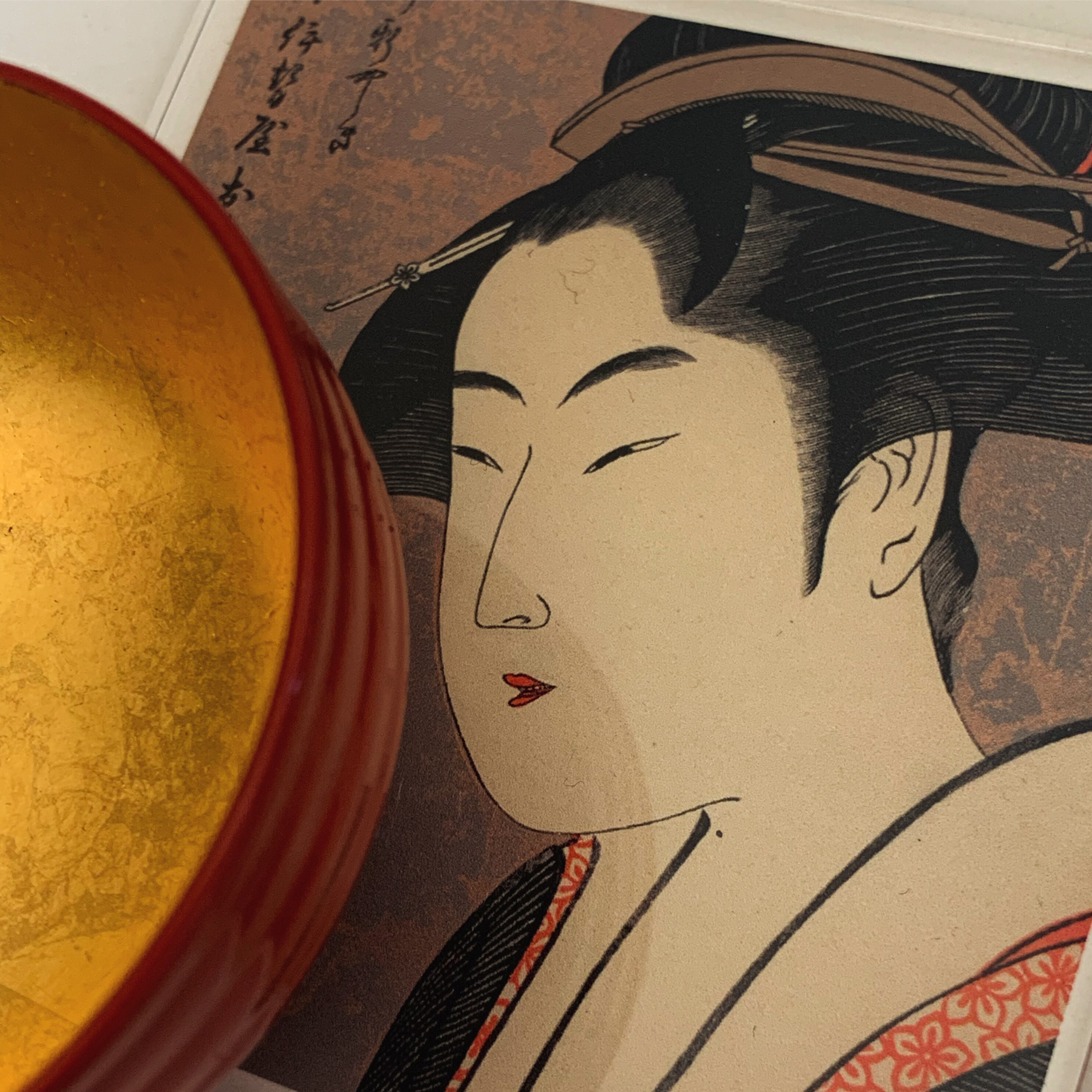
本作で歌麿は、おちゑの透き通るような白い肌と、まだ幼さを残しながらも気品に満ちた顔立ちを、流麗な細線で完璧に表現しています。左手で着物の袂(たもと)を軽く持ち上げるしなやかな所作、そして結い上げられた髪の緻密な描写は、歌麿の卓越した技量の証です。
背景に施された「雲母摺(きらすり)」が、彼女の存在を特別な光の中に浮かび上がらせ、江戸の町娘としての瑞々しい美しさを神々しいまでに引き立てています。実在のスターを鮮やかに記録した、江戸のファッション・グラビアの最高峰です。
[Kitagawa Utamaro]
The leading master of "Bijin-ga" (paintings of beautiful women) during the golden age of Ukiyo-e. He excelled at capturing not just feminine beauty but also the latest trends and celebrities of Edo, famously portraying real-life teahouse waitresses who became the city's icons.
[Ochie of Koiseya, Kobikicho Shin-Yashiki]
This "Okubi-e" (large-head portrait) depicts Ochie, a famous waitress from the teahouse "Koiseya" in the Kobikicho district (present-day Ginza). She was celebrated as one of the "Three Beauties of Edo," drawing vast crowds of admirers. Utamaro captures her youthful yet dignified face and translucent skin with his signature delicate lines. Her graceful posture, as she lifts her sleeve, and the intricate detail of her coiffure demonstrate Utamaro's unparalleled craftsmanship. The shimmering mica background (Kira-suri) elevates her presence, making the charming town girl appear almost divine. This work stands as a premier example of Edo-era celebrity portraiture, blending realistic features with idealized elegance.
#喜多川歌麿 #小伊勢屋おちゑ #浮世絵 #美人画 #大首絵 #江戸時代 #江戸の三美人 #雲母摺 #看板娘 #伝統美 #KitagawaUtamaro #Ukiyoe #JapaneseArt #Bijinga #EdoPeriod #CelebrityPortrait #CulturalHeritage #MuseumQuality