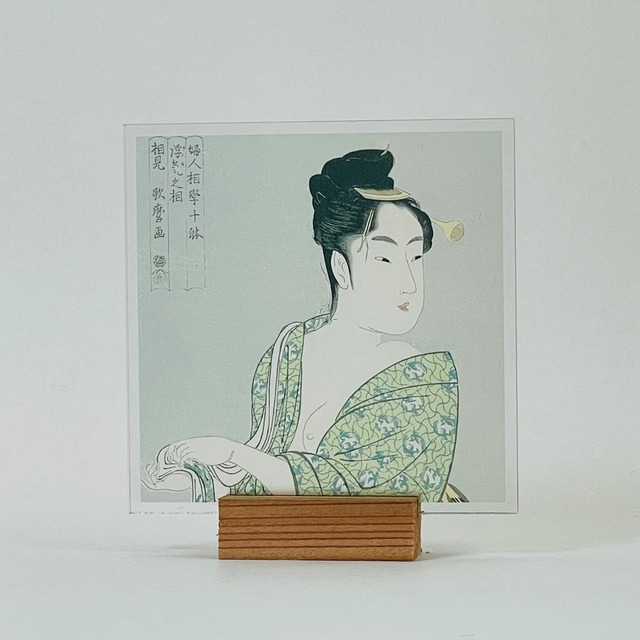
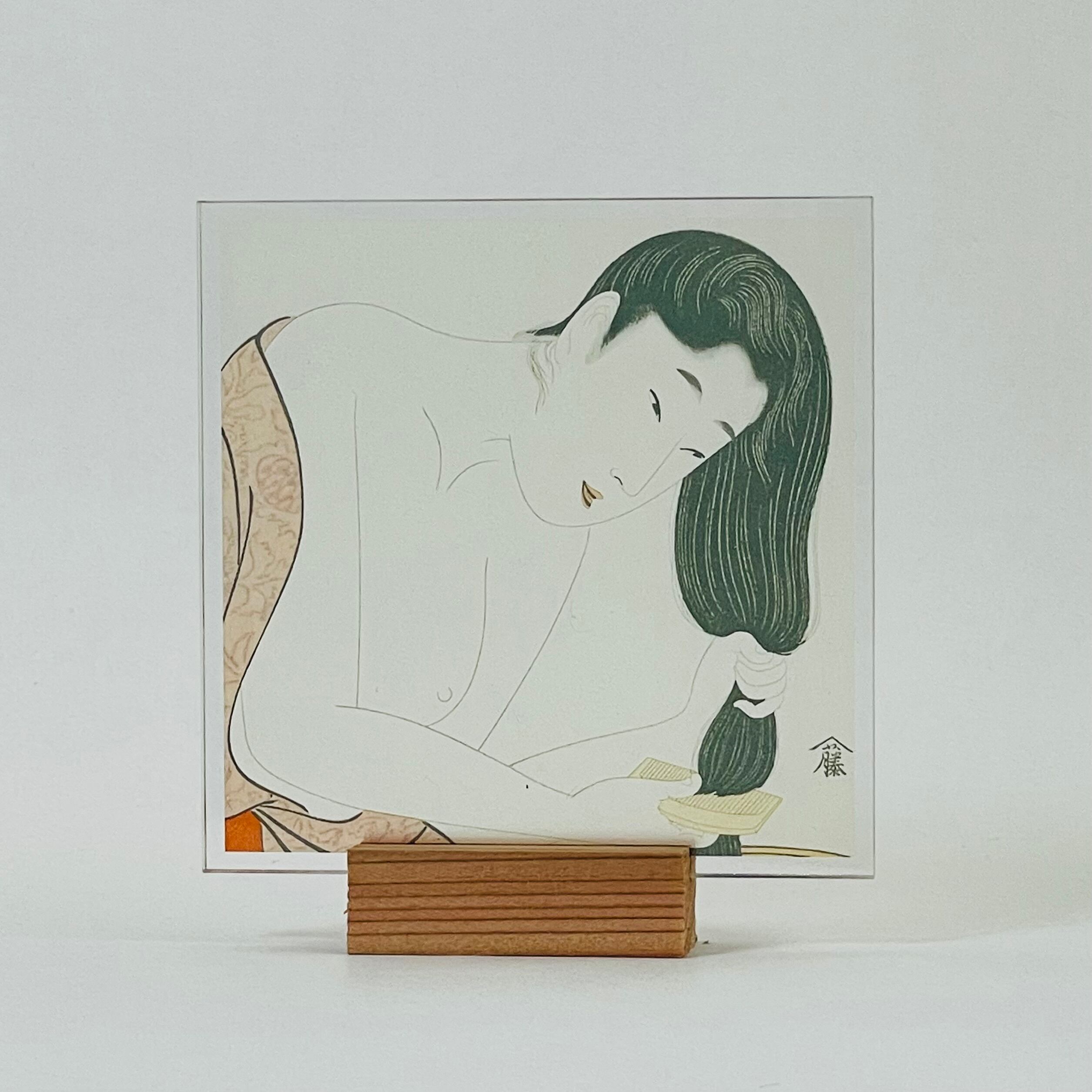
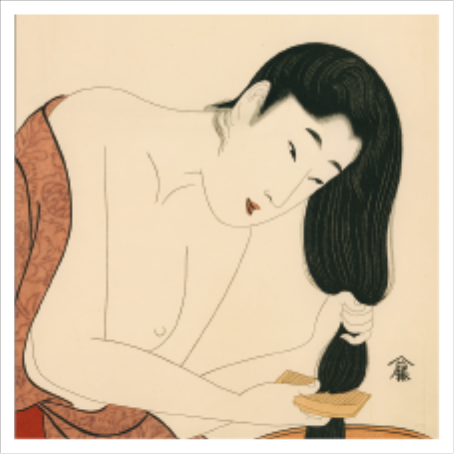


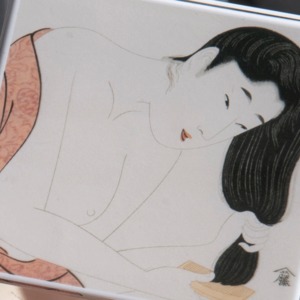


喜多川歌麿 婦人相学拾躰・髪洗い / Ten Physiognomies of Women: Washing Hair
【喜多川歌麿】
江戸時代、浮世絵黄金期を築いた美人画の第一人者。女性の顔や上半身を大きく捉える「大首絵(おおくびえ)」を得意とし、その繊細な筆致で、女性の内面的な情動や日々の生活の中に潜む一瞬の美しさを鮮やかに描き出しました。
【婦人相学拾躰・髪洗い】
女性の様々な性質や状態を十の型で描き分けた「婦人相学拾躰」シリーズの一図です。
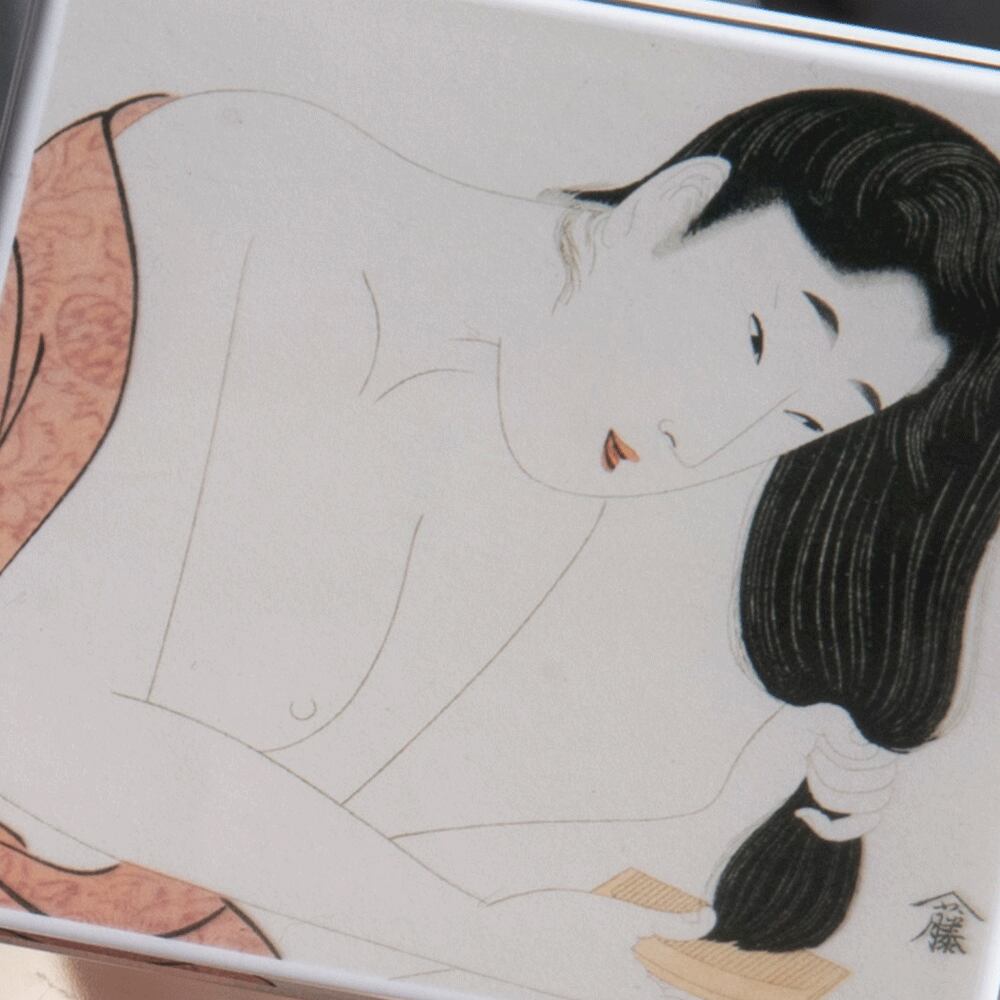
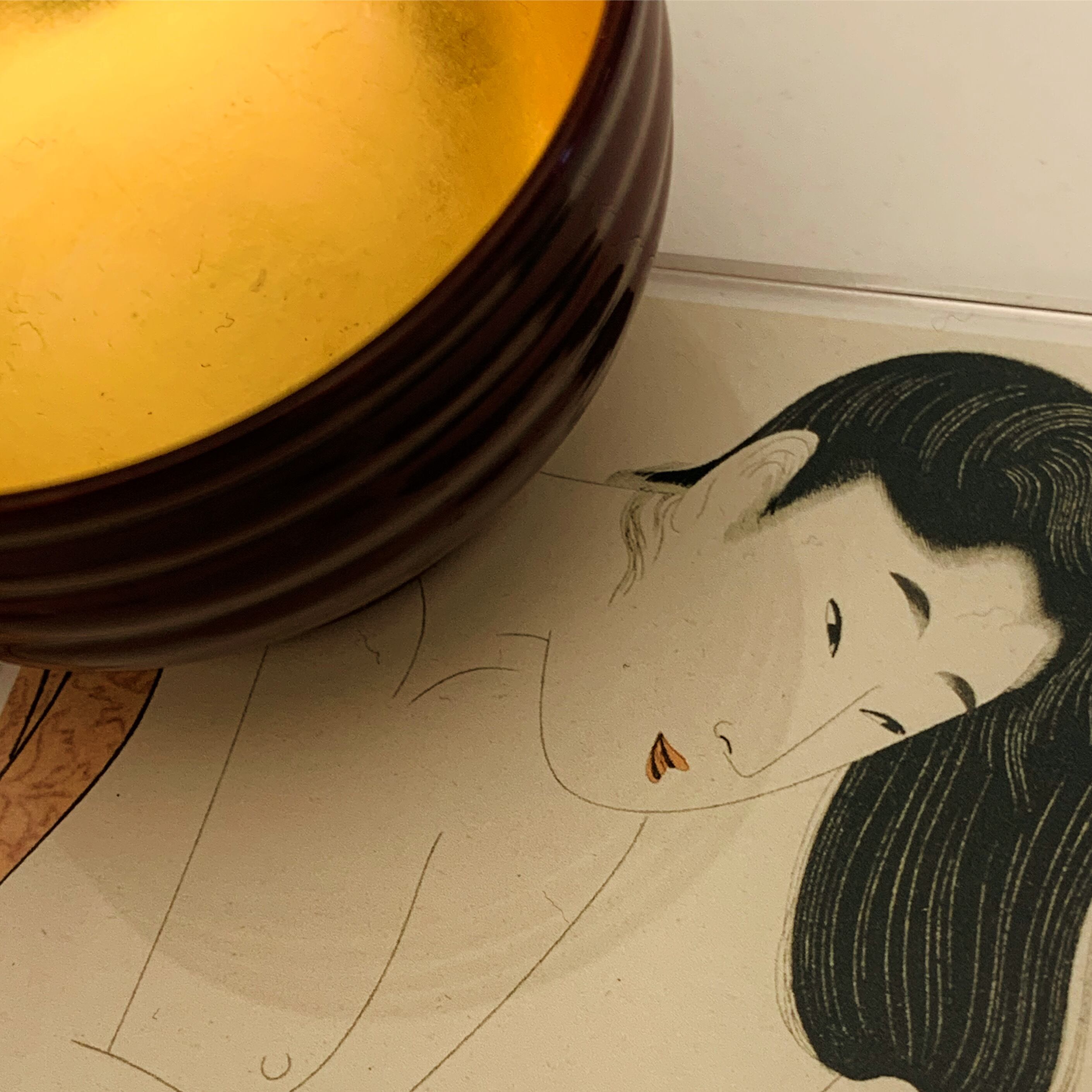
本作は、結った髪を解き、盥(たらい)の前に屈んで髪を洗う女性の姿を捉えています。豊かな黒髪が水に濡れ、肩から背中へと流れるライン。その重なり合う髪の一本一本までが、歌麿の流麗な線によって緻密に表現されています。
襟足を大きく見せ、着物を寛がせた姿には、当時の浮世絵が求めた「生活の中の色香」が漂います。しかし、それは決して下品なものではなく、日常の清潔な美しさとして昇華されています。背景の「雲母摺(きらすり)」が、水しぶきの清涼感と女性の白い肌の質感をよりいっそう際立たせ、静かな水の音までもが聞こえてきそうな臨場感を生んでいます。
[Kitagawa Utamaro]
The leading master of "Bijin-ga" (paintings of beautiful women) during the golden age of Ukiyo-e. He specialized in "Okubi-e" (large-head portraits), using his delicate brushwork to vividly capture both the inner emotions and the fleeting moments of beauty found in the daily lives of women.
[Ten Physiognomies of Women: Washing Hair (Fujin Sogaku Juttai: Kami-arai)]
This print is part of the "Ten Physiognomies of Women" series, which explores various feminine characters and states. It depicts a woman crouched before a washbowl, having unpinned her hair to wash it. The flow of her abundant black hair, wet and cascading over her shoulders and back, is rendered with incredible precision through Utamaro’s fluid lines. The depiction of her exposed neck and loosely worn kimono evokes the "sensuality of daily life" highly prized in Ukiyo-e, yet it remains refined and celebrates a moment of pure, domestic beauty. The shimmering mica background (Kira-suri) enhances the cool sensation of the water and the translucency of her skin, creating an atmosphere so vivid one can almost hear the gentle splashing of water.
#喜多川歌麿 #髪洗い #浮世絵 #美人画 #大首絵 #江戸時代 #雲母摺 #江戸の生活 #黒髪 #伝統美 #KitagawaUtamaro #Ukiyoe #JapaneseArt #Bijinga #EdoPeriod #DailyLife #CulturalHeritage #MuseumQuality