

喜多川歌麿 婦女人相十品・ポッピンを吹く女 / Woman Blowing a Glass Toy (Poppin)
【喜多川歌麿】
江戸時代、浮世絵黄金期を代表する美人画の大家。女性を近接して描く「大首絵(おおくびえ)」を確立し、江戸の女性たちの流行や心理を鮮やかに切り取りました。その洗練されたスタイルは、当時のファッションリーダーたちに多大な影響を与えました。
【ポッピンを吹く女】
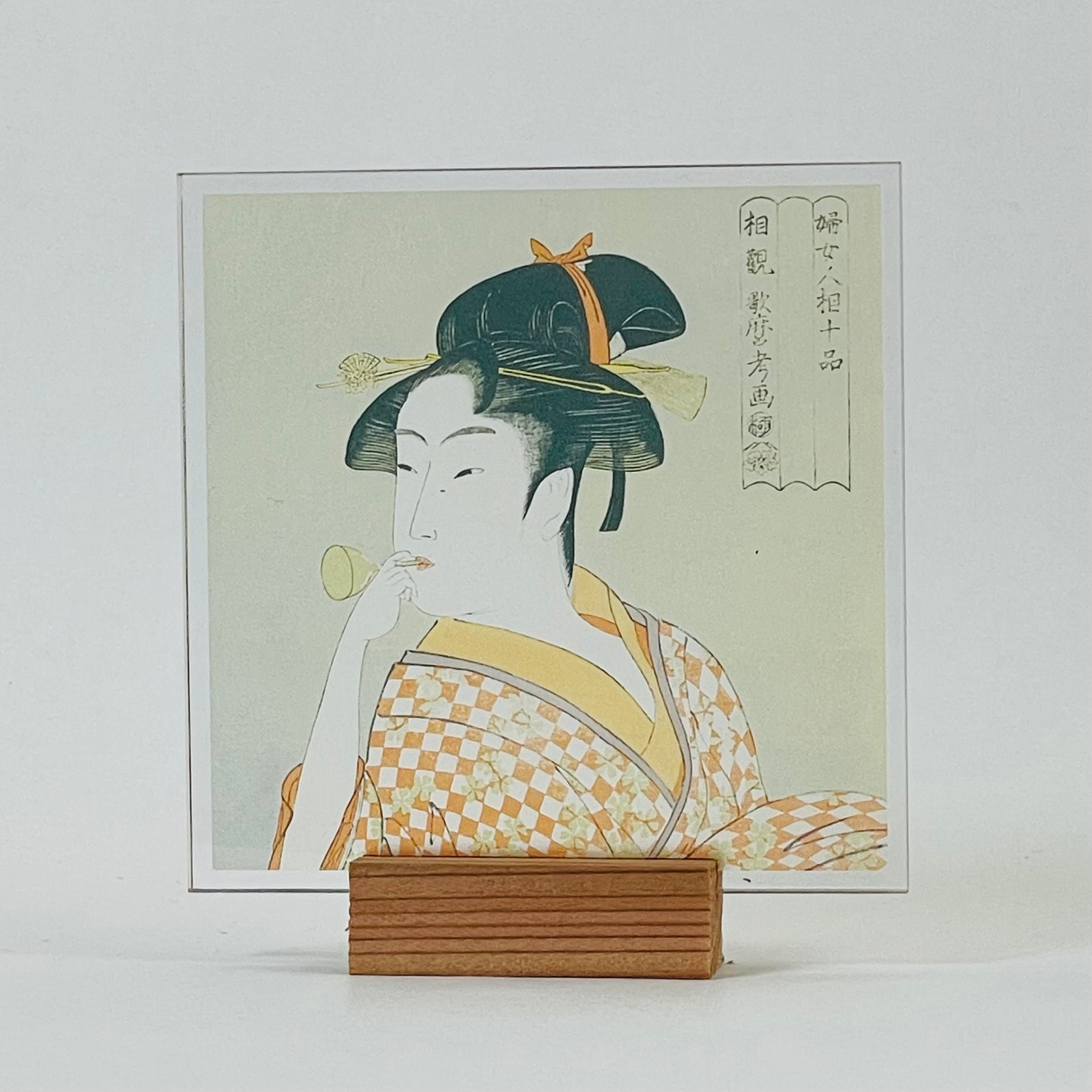
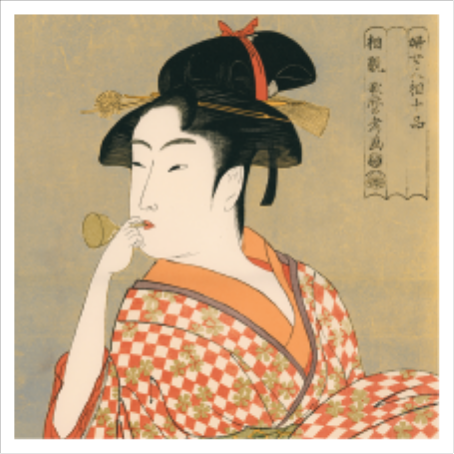
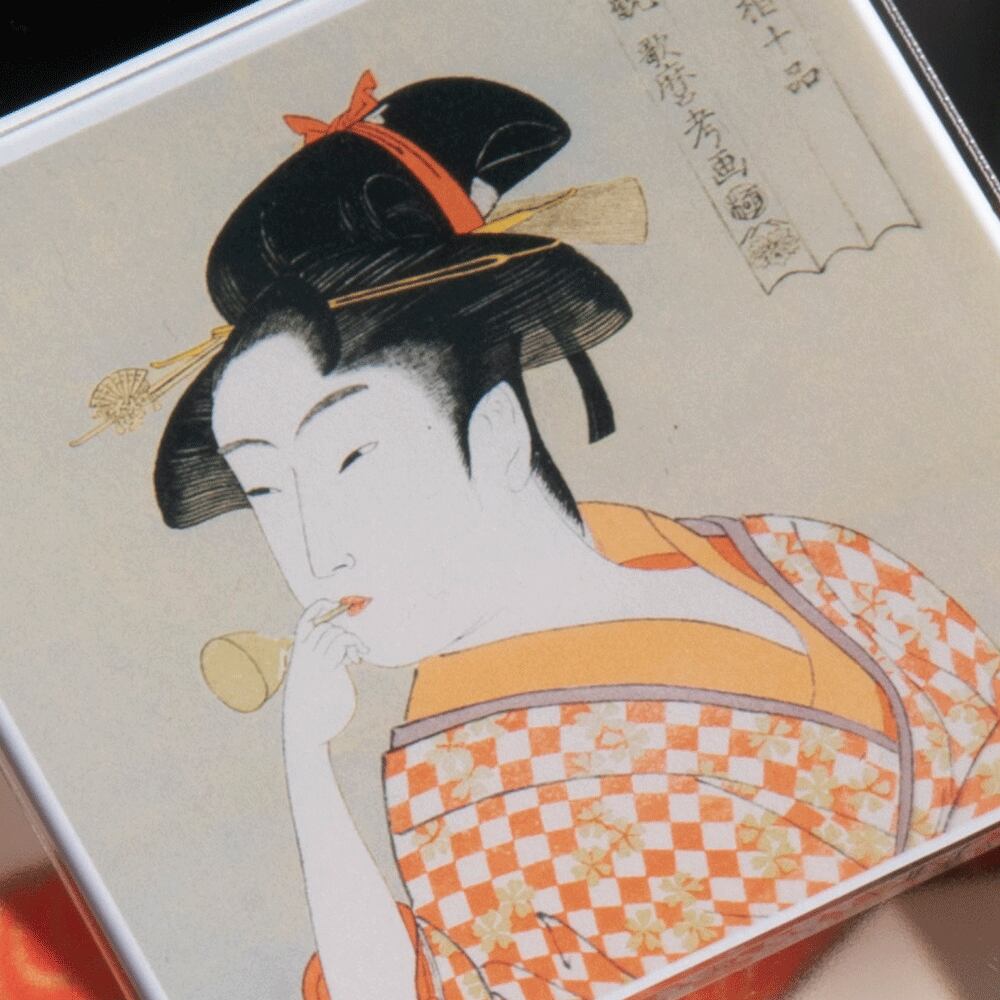
歌麿の代名詞とも言える本作は、シリーズ「婦女人相十品(ふじんにんそうじゅっぴん)」のうちの一図です。当時流行した「ポッピン(ポペン)」と呼ばれるガラス製の玩具を口にくわえ、その音を楽しんでいる若い女性が描かれています。
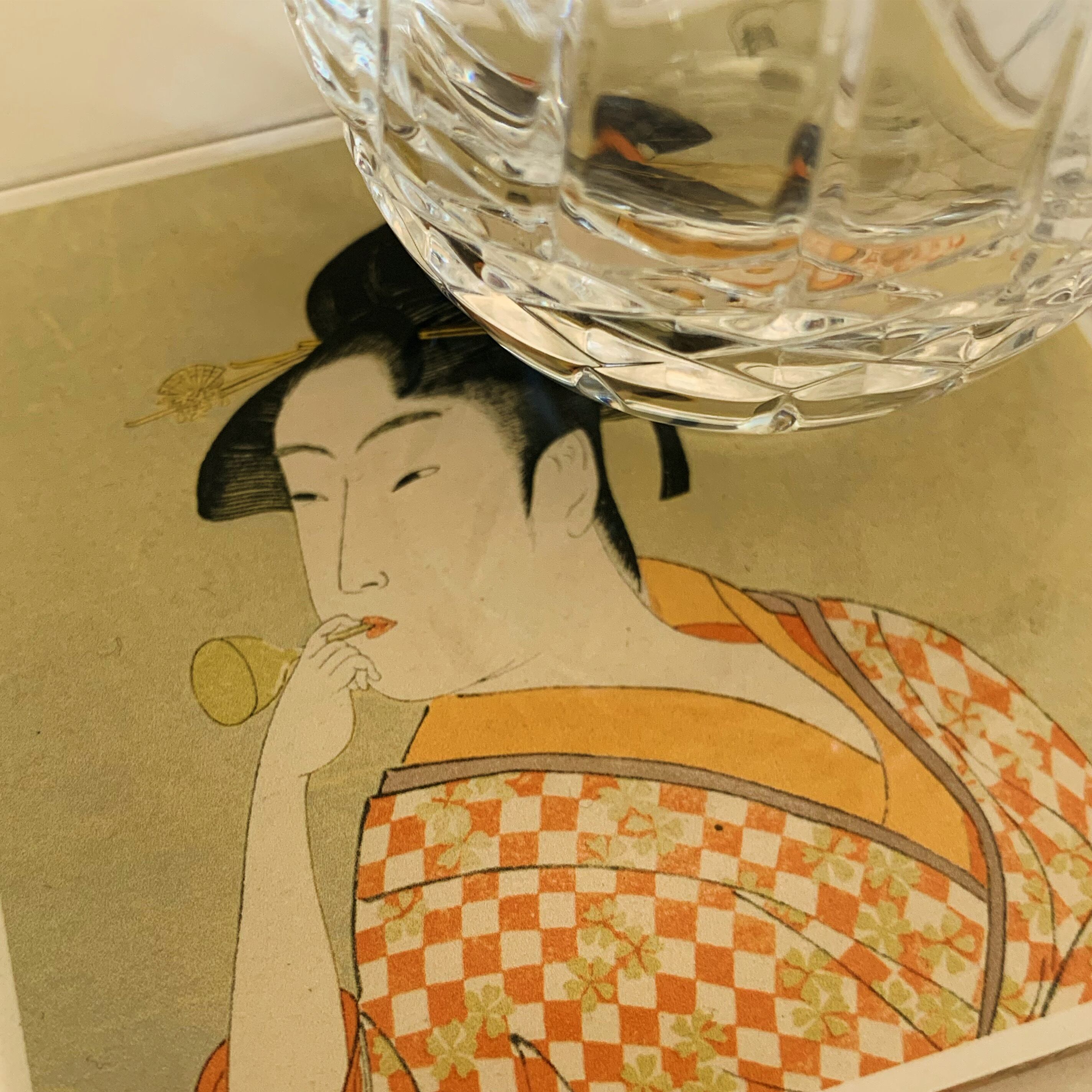
注目すべきは、女性の若々しさを象徴するディテールの数々です。市松模様の振り袖に、まだ幼さを残す愛らしい表情。ガラスの繊細な透明感と、それを吹く瞬間の頬のわずかな動きまでが、流麗な線描によって表現されています。
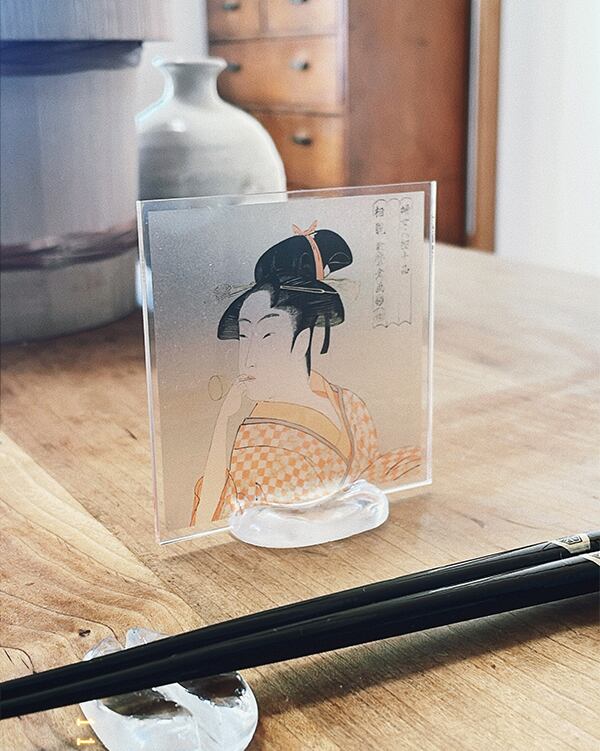
背景には、高級感溢れる「雲母摺(きらすり)」が施され、銀色の輝きが彼女の白い肌をより瑞々しく引き立てています。江戸の平和な日常に流れる、軽快で弾けるような音までが聞こえてきそうな、時代を超えて愛されるポップな名作です。
[Kitagawa Utamaro]
The preeminent master of "Bijin-ga" (paintings of beautiful women) during the golden age of Ukiyo-e. He specialized in "Okubi-e" (large-head portraits), capturing the fashion, personality, and fleeting moments of women in Edo with unparalleled elegance and precision.
[Woman Blowing a Glass Toy (Popen) / Fujo Ninso Juppin: Popen o fuku onna]
This iconic work is perhaps Utamaro's most famous masterpiece. It depicts a fashionable young woman blowing into a "Popen," a delicate glass toy that makes a popping sound when air is blown into it. The print is a brilliant showcase of Edo-era youth and "Iki" (chic aesthetics). Her checkered kimono and innocent, lively expression reflect the carefree spirit of a daughter from a wealthy family. The shimmering mica background (Kira-suri) highlights her radiant skin, while the fine lines capture the fragile transparency of the glass toy. This work perfectly encapsulates a moment of playful delight, standing as a timeless symbol of Japanese pop culture from the Edo period.
#喜多川歌麿 #ポッピンを吹く女 #浮世絵 #美人画 #大首絵 #江戸時代 #雲母摺 #江戸の粋 #伝統工芸 #ポペン #KitagawaUtamaro #Ukiyoe #JapaneseArt #Bijinga #EdoCulture #PopCulture #CulturalHeritage #MuseumQuality